
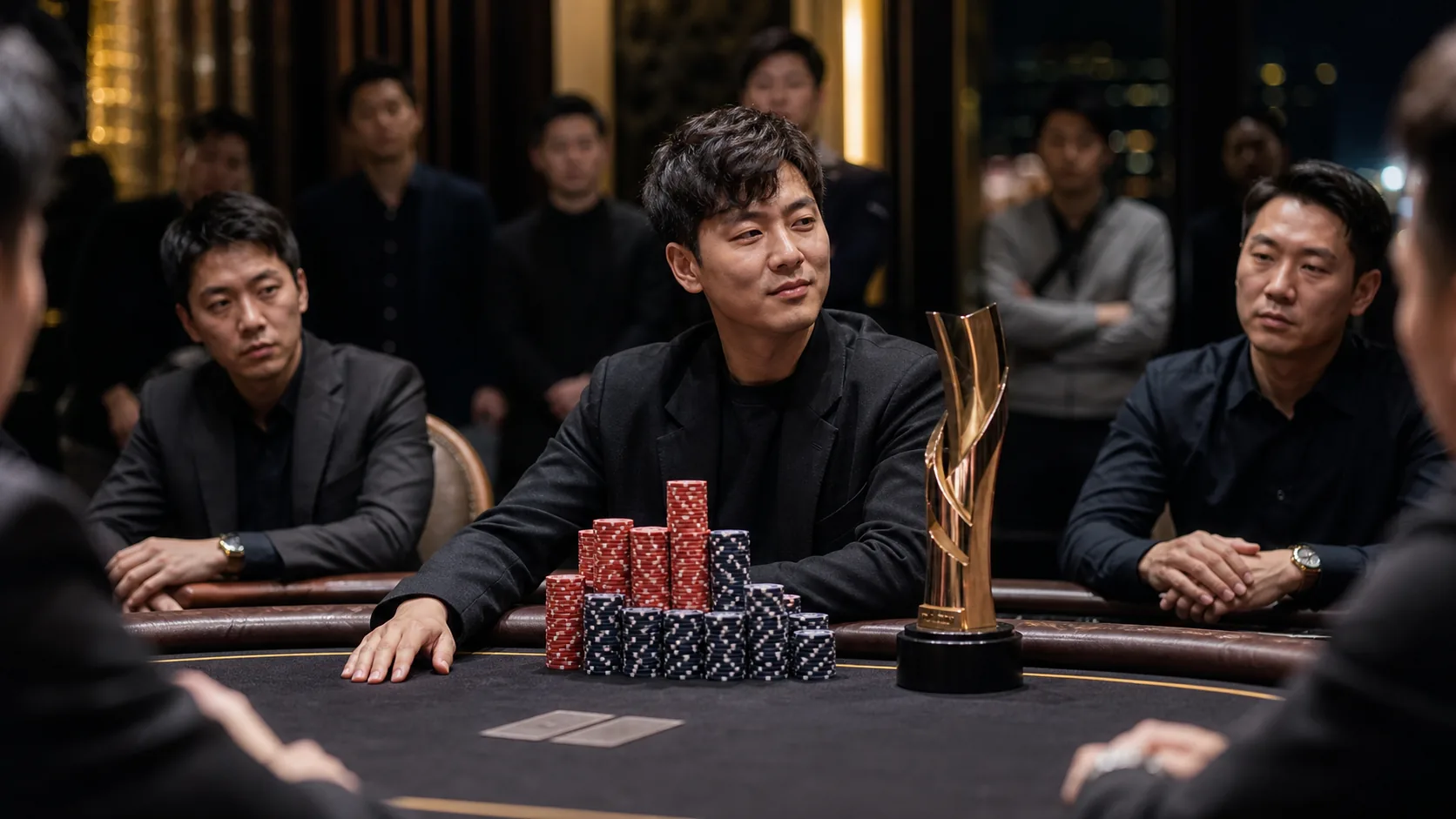
Vietnam's Khoa Anh Ngo won Event 11, the KRW4 million Single Day High Roller at APT Incheon 2026, earning KRW52,870,000 at Paradise City Casino. Japan's Tadahiro Nakashima finished second for KRW36,550,000, while fellow Japanese player Sho Miura placed third for KRW23,330,000.
The tournament attracted 45 entries and created a KRW155,520,000 prize pool. Its all-Asian top three provides an early snapshot of the regional talent contest developing at the South Korean stop, where the schedule combines affordable opening events with a dense series of premium buy-ins aimed at established professionals and well-funded recreational players.
Ngo Leads a Regional Final Podium
Ngo's victory placed a Vietnamese player ahead of two Japanese opponents in one of the festival's first completed high rollers. The result should not be generalized into a forecast for every event, but it reflects the cross-border nature of the tour. Players from several Asian markets routinely travel between stops, carrying rankings, experience and commercial attention with them.
For the host property, that regional mix is valuable. Premium players may stay for several days, enter multiple tournaments and use resort services between sessions. Their visibility can also attract rail interest and coverage. The tournament result therefore has relevance beyond the three podium payouts, even though the operator has not disclosed spending generated elsewhere in the resort.
A KRW4 Million Buy-In Produced KRW155.52 Million
Event 11 had a total buy-in of KRW4 million, divided by the official structure between the prize-pool contribution, tournament fee and staffing allocation. Forty-five entries generated a published prize pool of KRW155.52 million. Ngo's KRW52.87 million award represented the largest share, followed by Nakashima and Miura.
High-roller fields are usually smaller than mass-participation events because the cost of entry narrows the eligible audience. Their prize pools can still be substantial because every seat contributes far more money. That relationship makes entry count and prize pool both important: one describes traffic, while the other describes the financial scale of the competition.
The Single-Day Format Concentrates Premium Action
The event used a single-day structure with a 100,000-chip starting stack and levels that began at 30 minutes before shortening later in the tournament. A condensed format gives traveling players a defined commitment and lets them move quickly to another event, but it also concentrates strategic decisions and operational demands into one session.
For the organizer, single-day high rollers create additional premium inventory without occupying tables across several calendar days. For players, the format reduces the accommodation time tied to one tournament but does not reduce financial risk. A participant can still lose the entire buy-in in a short period, and faster late levels can increase the importance of short-stack decisions.
Asian Players Set the Early High-Roller Narrative
The podium reinforces the importance of intra-Asian travel to the festival. Vietnam has an increasingly visible professional player base, while Japan is a major source market for Korean poker stops because of geographic proximity and transport links. Incheon International Airport and Paradise City's resort setting make the destination relatively practical for short regional trips.
A single podium cannot prove national dominance. Results depend on field composition, entries, cards and individual decisions, and the rest of the festival may produce a different mix of winners. The appropriate conclusion is narrower: three Asian players captured the leading payouts in this event, giving the early premium schedule a distinctly regional profile.
High Rollers Matter to Casino Resort Economics
Premium tournaments can attract customers with greater gambling and hospitality budgets, making them relevant to VIP acquisition. The value is not limited to tournament fees. Some visitors may book higher-category rooms, dine on property or participate in other gaming, though none of those behaviors should be assumed for an individual player without resort data.
The channel also carries service expectations. High-buy-in customers expect efficient registration, accurate structures, secure chip handling and prompt payouts. Tournament organizers and casino staff must meet those standards consistently. A strong schedule can bring premium traffic through the door, but operational quality determines whether players return to the venue or recommend it to others.
The Result Adds Momentum to APT Incheon
Ngo's win followed the record-setting Korea National Cup and arrived as the festival moved into its Main Event period. Together, those outcomes show activity at two different price points: a large accessible field and a smaller premium contest. That balance is central to a multi-event festival because no single player segment can fill every day of the schedule.
Later high rollers have larger guarantees and buy-ins, including the APT Super High Roller and the Superstar Challenge. Event 11 does not predict their turnout, but it establishes that the early premium program attracted enough entries to produce a nine-figure won prize pool. Final fields will show whether demand increases as more international players arrive.
A Result That Can Build Player Profiles
Tournament results also have value for players beyond the immediate payout. A recognized tour title can improve visibility with followers, backers and potential commercial partners, particularly when it is earned against an international field. That reputational value is difficult to quantify and should not be confused with guaranteed future income, but it helps explain why premium trophies attract established competitors.
For Ngo, the Incheon title adds another documented result to a record already built through major Asian events. For Nakashima and Miura, the podium finishes provide substantial returns without the trophy. All three results become part of the tour's public history, supporting rankings and future coverage while giving regional audiences recognizable players to follow during the remaining schedule.
Public results also let future fields be evaluated on evidence. Entry counts, payouts and national representation can be compared across stops without relying on promotional adjectives. That record benefits players choosing a schedule, organizers seeking sponsors and venues assessing whether premium poker is delivering the international audience they intended to attract.
Bankroll Discipline Still Applies
High-roller coverage naturally focuses on winners, trophies and large payouts. The full economic picture includes every unsuccessful entry. Players should treat a buy-in as money at risk, set limits before entering and avoid using essential funds or assuming that skill removes short-term variance. Travel costs and re-entry opportunities can increase total exposure.
Transparent reporting helps readers keep the result in perspective. The published prize pool, field size and payout positions provide verifiable facts, while claims about broader resort revenue require separate evidence. That distinction supports responsible coverage and gives the industry a more useful measure of what the tournament actually achieved.
Bottom Line
Khoa Anh Ngo won the APT Incheon Single Day High Roller for KRW52.87 million after a 45-entry field generated KRW155.52 million in prizes. Tadahiro Nakashima collected KRW36.55 million as runner-up and Sho Miura earned KRW23.33 million in third, completing an all-Asian podium.
The outcome highlights the regional player traffic supporting Paradise City's poker festival and demonstrates how a compact premium event can create a substantial prize pool. Its business importance lies in attracting high-value visitors and strengthening the stop's competitive profile. The remaining schedule will show whether that momentum extends into larger two-day high rollers and the Main Event.