
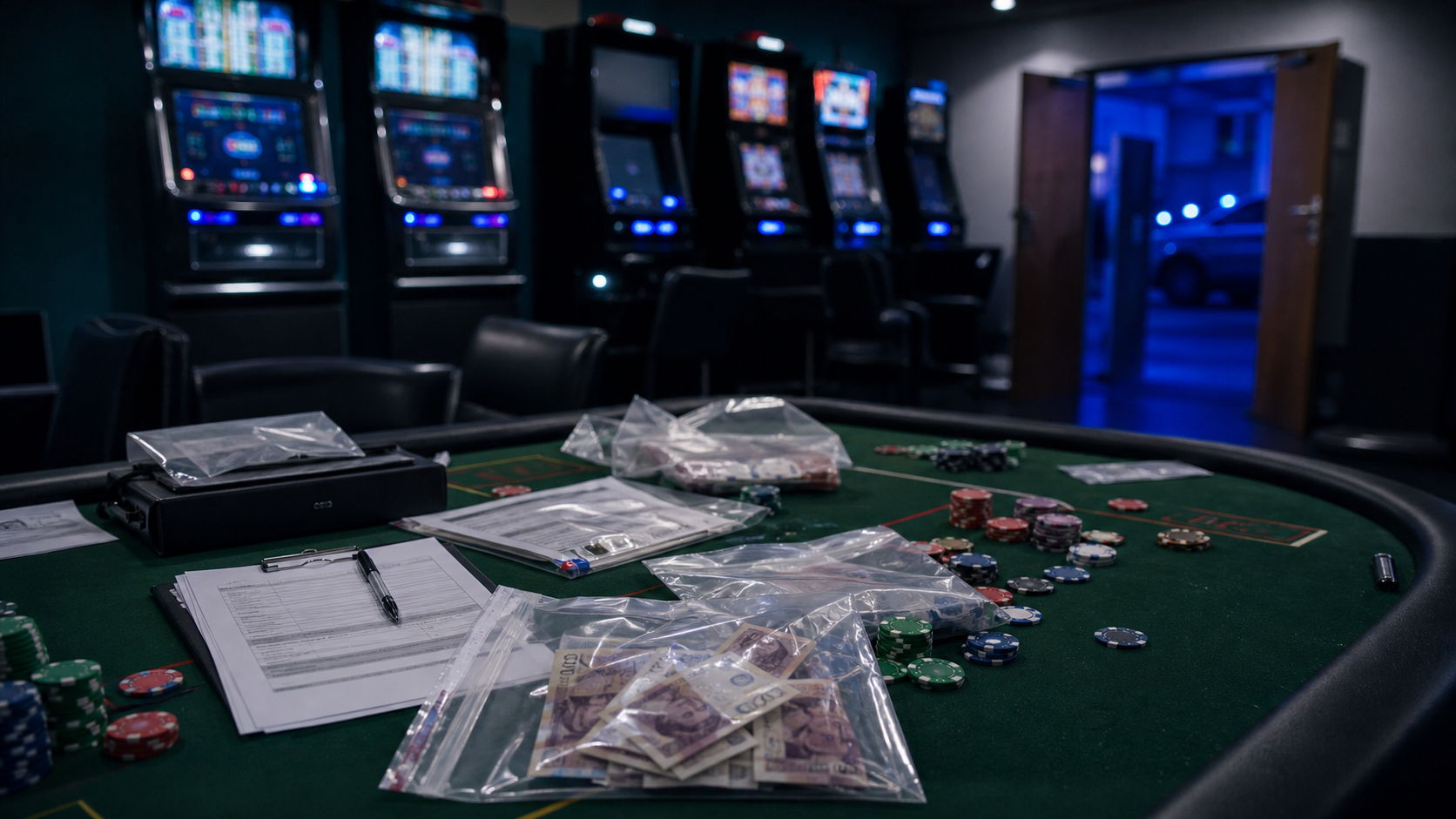
Eight people were arrested after UK authorities raided two suspected unlicensed gambling venues in Doncaster city centre, in an operation that brought together the Gambling Commission, South Yorkshire Police, Immigration Enforcement and City of Doncaster Council teams. The Commission said the premises were targeted as part of Operation Snaresbrook, a joint enforcement action designed to disrupt illegal gambling dens operating outside the licensed system.
According to the regulator, officers seized just under £9,000 during searches and found poker tables, slot machines and account books at the businesses involved. One person was arrested for suspected offences under the Gambling Act 2005, while seven others were arrested for immigration offences. The mix of gambling, cash handling, records and immigration enforcement makes the case a useful example of how illegal gambling premises can trigger multiple public-agency risks at once.
Physical Enforcement Still Matters
Much of the modern gambling-policy debate focuses on online betting, offshore operators, crypto casinos and digital advertising. The Doncaster raids are a reminder that land-based illegal gambling has not disappeared. A physical venue can still offer poker, gaming machines and cash-based play without the safeguards that licensed operators must follow.
That matters because illegal premises can avoid age checks, anti-money laundering controls, safer gambling obligations, machine standards, recordkeeping and local licensing rules. Players may have little protection if a dispute arises, and regulators may have limited visibility until intelligence, complaints or partner-agency work identifies the venue.
Why Joint Operations Are Used
The Gambling Commission did not act alone. South Yorkshire Police, Immigration Enforcement and local trading standards and licensing teams were also involved. That kind of joint operation is common where suspected illegal gambling intersects with other concerns such as cash crime, employment issues, immigration status, premises licensing and community safety.
For the Commission, the gambling-law question is whether gaming is being offered without the necessary licence or exemptions. For police and local authorities, the same premises may raise broader questions about who controls the site, how cash is handled, whether other offences are occurring and whether the location is creating harm in the surrounding area. Immigration Enforcement's involvement shows that illegal gambling investigations can quickly move beyond the Gambling Act alone.
Poker Tables, Slot Machines and Account Books
The items found in the searches explain why the regulator treated the matter as more than casual play. Poker tables suggest organised card-game activity. Slot machines suggest machine gaming that would normally require clear controls around machine type, availability, stakes, prizes and premises permissions. Account books may help investigators understand how money moved through the venues, who controlled the activity and whether the businesses had repeat customers or a wider operating structure.
The seizure of just under £9,000 is also important. Cash is not proof of illegal gambling by itself, but cash alongside gaming equipment and records can become part of the evidential picture. It can also raise questions about proceeds, tax, money laundering and whether the venue was operating as a business rather than as informal private play.
The Message to Operators and Local Authorities
For licensed operators, enforcement against illegal competitors is significant. Licensed businesses face fees, compliance checks, AML requirements, customer-interaction duties and restrictions on how products are offered. Unlicensed venues can undercut that system if enforcement is weak. Visible raids help show that the regulator is willing to act against physical illegal gambling, not only against online operators.
For local authorities, the case is a reminder that gambling enforcement often depends on local intelligence. City-centre premises, private rooms, social clubs and businesses with gaming activity may need attention from licensing teams as well as national regulators. The most effective response often comes when local officers, police and the Commission combine information rather than treating gambling as a standalone issue.
Bottom Line
The Doncaster raids show that the UK's illegal gambling problem is not limited to websites or offshore brands. Two physical venues were searched, eight people were arrested, cash was seized and officers found gaming equipment and account records. That is exactly the type of fact pattern that can bring gambling law, policing, immigration and local licensing together.
The broader signal is clear: the Gambling Commission is prepared to use multi-agency enforcement where unlicensed gambling is suspected on the ground. For the legal market, that matters because player protection and fair competition both depend on keeping unlicensed venues outside the system from operating unchecked.
Source: UK Gambling Commission