
Preston has brought a revised gambling licensing policy into force, giving operators and residents a clearer view of how betting shops, bingo halls, adult gaming centres and other physical gambling premises will be assessed over the next three years. The city council's Statement of Gambling Policy took effect on 28 July 2026 after being approved by the full council on 25 June.
The document does not create a blanket ban on new gambling businesses, nor does it replace the national role of the UK Gambling Commission. Instead, it sets the local rules of engagement: how Preston will consider premises licence applications, proposed variations, temporary gambling uses, licence reviews and the day-to-day responsibilities of licensed venues.
Its most important theme is that a licence cannot be treated as a one-time paperwork exercise. Operators are expected to understand the neighbourhood around each venue, identify changes that could increase risk and show that their safeguards work in practice. That turns local knowledge into an active part of compliance rather than a box to tick when an application is first submitted.
What the Policy Actually Does
Under the Gambling Act 2005, Preston must aim to permit gambling when it is consistent with Gambling Commission codes and guidance, the three statutory licensing objectives and the council's own policy. Those objectives are to keep gambling free from crime and disorder, ensure it is conducted fairly and openly, and protect children and other vulnerable people from harm or exploitation.
The local policy explains how the council will apply those tests to individual premises. Applications are considered on their merits, but location, access, supervision, management controls and the character of the surrounding area can all influence the decision. Conditions may be attached where they are necessary and proportionate, while a review can be requested when a venue appears to be failing its licence obligations.
There is an important limit to the headline. Preston cannot currently accept an application for a new casino premises licence because only designated local authorities have that power. In practical terms, the policy is most likely to be felt by bookmakers, bingo operators, adult gaming centres, family entertainment centres, tracks and businesses seeking permits or temporary use notices.
What Changes for Operators
For operators, the biggest operational demand is the local risk assessment. A new premises application must include one, and an existing assessment must be reviewed when significant local circumstances change, when a venue changes in a way that could affect safeguards or when the operator applies to vary a premises licence.
That means a generic national template is unlikely to tell the whole story. A useful assessment should consider who passes the premises, nearby services and institutions, patterns of deprivation or vulnerability, entrances and sightlines, opening hours, machine placement, advertising, cash access and the ability of staff to identify and respond to harmful behaviour.

The council also places weight on evidence. Staff should be trained in age verification, safeguarding, self-exclusion, identifying vulnerability and directing customers to support. Venues may need refusal, incident and intervention logs, together with records showing how managers respond when someone appears intoxicated, distressed, unable to make a balanced decision or determined to chase losses.
Operators may see this as a heavier compliance load, especially where a business manages several small premises. Yet the policy also offers something useful: clearer expectations. A company that can connect its risk assessment to staffing, layout, monitoring and recorded interventions should be in a stronger position to explain why its controls are appropriate for that specific location.
The Public Protection View
From the council's perspective, the policy is a way to translate broad national objectives into local safeguards. Preston identifies a wide group of people who may be vulnerable to gambling-related harm. That group includes children, young adults up to 21, people gambling beyond their means, people affected by mental health, learning disability or substance misuse, those seeking treatment, residents of more deprived areas and gambling employees with regular exposure to gambling.
Public health and consumer-protection advocates are likely to focus on that broader definition. Harm is not confined to underage gambling or a single dramatic incident. It can develop through repeated spending, easy access, long sessions, weak intervention and the concentration of gambling opportunities in places where residents already face financial pressure.
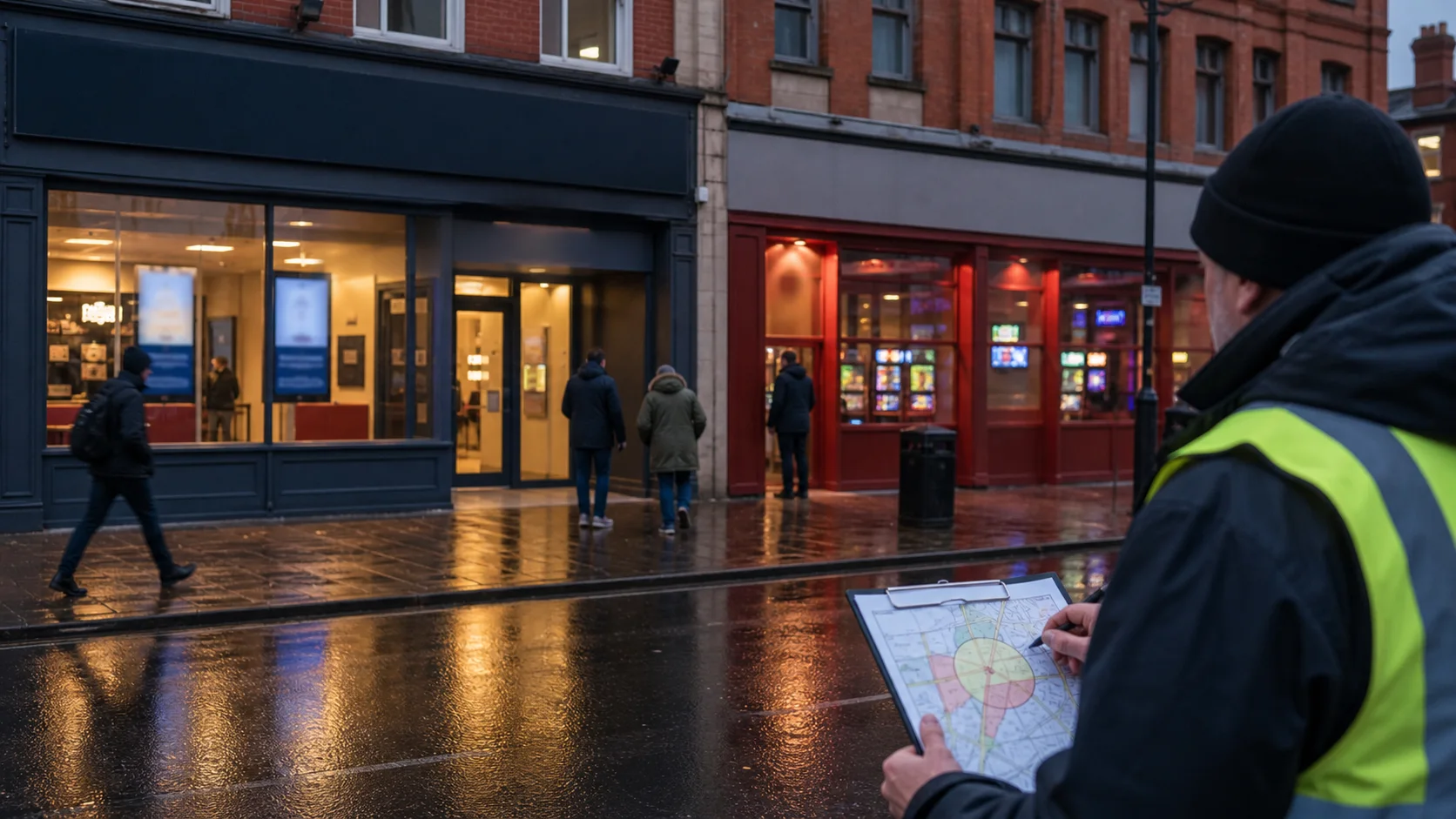
The policy's emphasis on Think 25 checks, prominent and discreet support information, self-exclusion, intervention logs and trained staff reflects that wider view. It asks venues to notice risk before it becomes a crisis. For residents, the practical test will be whether those expectations produce visible changes at premises and whether concerns raised with the authority lead to proportionate follow-up.
The Business and Community Tension
Local gambling policy always sits between competing interests. Licensed venues are legal businesses, provide jobs and occupy high-street property. Operators can reasonably argue that applications should be decided on evidence rather than public dislike of gambling, and the law itself starts from an aim to permit gambling when the licensing tests are met.
Residents and councillors, however, may look at the same proposal through the experience of a particular street: proximity to services used by vulnerable people, existing clusters of gambling premises, late opening, antisocial behaviour or the visibility of gaming to younger passers-by. The revised framework does not guarantee that either side wins. It requires those concerns to be connected to the licensing objectives and the facts of the individual site.
That is why the local risk assessment matters so much. Done well, it gives the operator, council and community a common document to challenge. Residents can ask whether a risk has been overlooked; operators can explain the controls they have chosen; licensing officers can decide whether extra conditions are justified. Done badly, it becomes boilerplate and leaves every side less confident in the process.
Why Preston Matters Beyond Preston
Preston's policy is local, but the direction is national. Across Great Britain, councils perform the street-level work of gambling premises licensing while the Gambling Commission regulates operators and personal licences. The two layers increasingly meet around local risk: national social-responsibility rules require assessments, and local authorities define the circumstances operators are expected to consider.
For land-based gambling groups, the lesson is that compliance cannot be managed only from head office. A policy written for the whole estate must still be translated into the geography and customer profile of each branch. Changes in a neighbourhood, a venue layout or a business model can trigger a fresh review even when the licence itself has existed for years.
For Preston, the measure of success will not be the number of applications refused. It will be whether decisions are consistent, evidence is current and venues respond early when risks change. The new policy gives the council a framework through 2029; operators now have to demonstrate that their local controls are more than words on a page.
Bottom Line
Preston's revised Statement of Gambling Policy sharpens the focus on how physical gambling premises fit into the communities around them. It preserves the legal presumption that compliant gambling can be permitted, while demanding more specific evidence about location, management and protection of vulnerable people.
The immediate impact is procedural, but the wider signal is clear. British local authorities expect premises operators to keep risk assessments alive, update them when conditions change and connect them to real staff behaviour. Over the next three years, that approach will shape not only new licences in Preston, but also how existing venues defend variations, answer concerns and retain public confidence.
Primary source: Preston City Council — Statement of Principles, Gambling Act 2005, published 2026-06-26.
Additional source: Preston City Council — Legal Framework and Licensing Objectives, published 2026-06-29.
Additional source: Preston City Council — Ongoing Responsibilities of Licensed Premises, published 2026-06-29.
Additional source: Preston City Council — Gambling Premises Types and Requirements, published 2026-06-29.