
Casino bankroll management is not a way to beat casino math. It is a way to control how much entertainment costs and how quickly a session can move. A bankroll is the amount of money set aside for play, separate from rent, bills, savings, food, debt payments and other real responsibilities. If that separation is not clear, the bankroll is not ready.
Good bankroll management starts before a deposit or casino visit. It asks three simple questions: how much can I afford to spend, how much will I risk per round, and when will I stop? Those questions are more useful than guessing which game will be lucky or trying to recover a previous loss.
This guide is written for adults aged 21 and over. It treats casino play as paid entertainment, not income. The aim is to make budgets, bet sizing and stop limits easy to understand so a player can make decisions while calm rather than while excited, frustrated or tired.
Start With an Entertainment Budget
An entertainment budget is money that can be lost without harming daily life. It should never include borrowed funds, bill money, emergency savings or money needed for family obligations. The simplest test is uncomfortable but useful: if the full amount disappeared, would anything important be unpaid? If the answer is yes, the budget is too high.
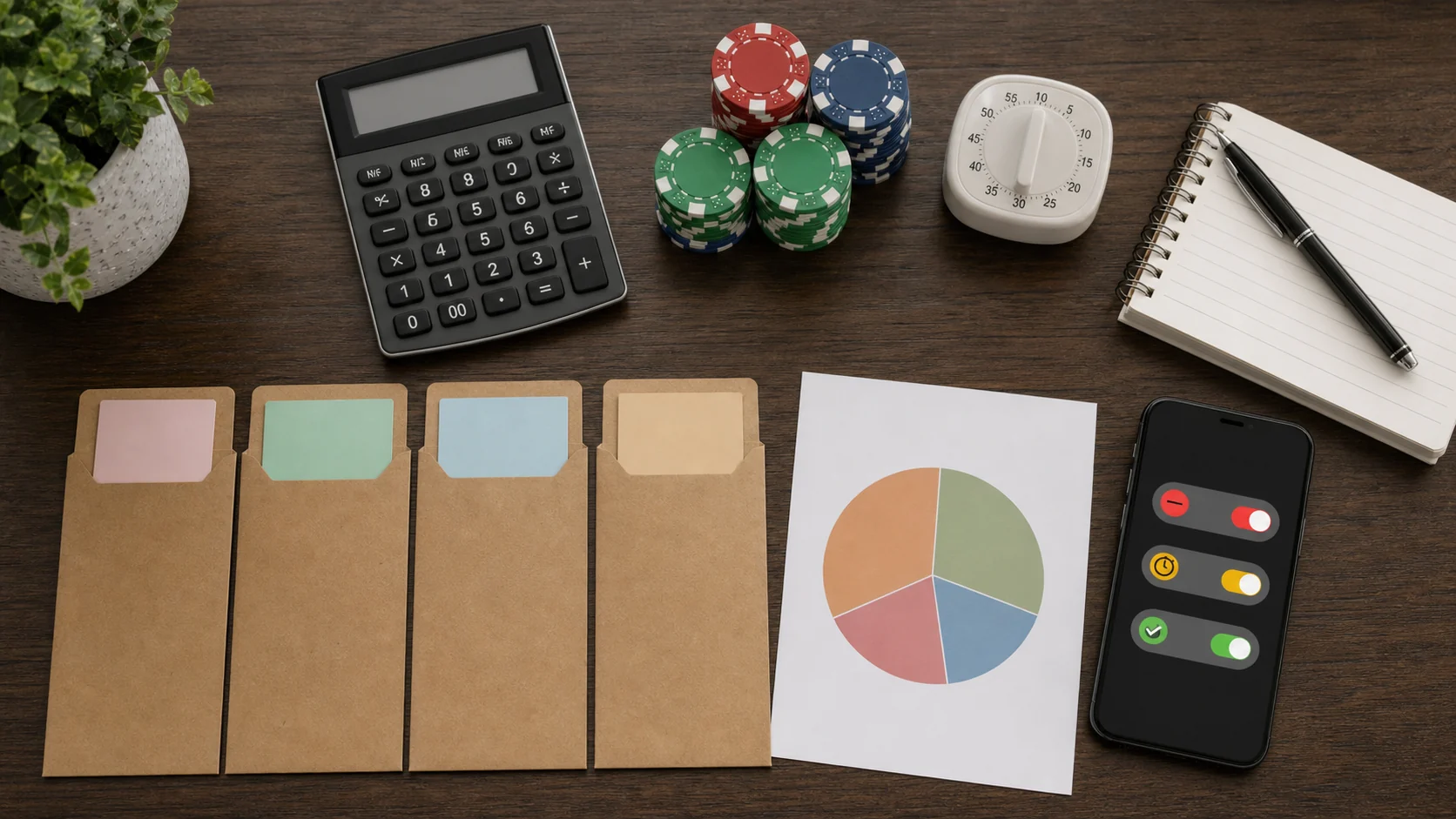
A monthly budget can be divided into smaller sessions. For example, someone with a 200 dollar monthly entertainment limit might choose four 50 dollar sessions. That makes it easier to avoid spending the full amount in one sitting. Smaller session budgets also create natural pauses for review.
Keeping gambling money separate helps reduce emotional decisions. When the session budget is gone, the session ends. Adding more money because the first amount was lost is not bankroll management. It is chasing, and it usually increases risk.
Choose a Bet Size That Fits the Bankroll
Bet size controls how many decisions a bankroll can survive. If a player has 100 dollars and bets 25 dollars per round, four losing rounds can end the session. If the same player bets 2 dollars per round, the session has more room for normal ups and downs. Smaller bets do not guarantee better results, but they reduce the speed at which money can disappear.
A common beginner mistake is choosing a table or slot based on excitement rather than affordability. Minimum bets matter. A game with a 10 dollar minimum may be too expensive for a 50 dollar session, even if the game itself looks simple. The bankroll should choose the game, not the other way around.
Think in units. A unit is the standard bet size for the session. If a bankroll has 50 units instead of 5, the player has more flexibility and less pressure from each individual result.
Stop-Loss and Stop-Win Limits
A stop-loss limit is the amount you decide you are willing to lose before stopping. It can be the full session budget or a smaller amount. A stop-win limit is a point where you decide to lock in a win and leave. Both limits work best when chosen before play starts.
Stop-win limits are often ignored because winning can make people feel confident. But a win is not protected until the session ends and the money is withdrawn or put away. If a player turns a 100 dollar budget into 180 dollars, choosing to leave with part of that gain can protect the result from being returned to the game.
Limits are not predictions. They are boundaries. Their value is that they remove the need to make a hard decision while emotions are loud.
Time Limits Matter Too
Money is not the only resource in a casino session. Time affects attention, decision-making and emotional control. Long sessions can make losses feel normal, wins feel temporary and extra deposits feel easier to justify. A time reminder can be as important as a spending limit.
Set a session length before play. When the reminder appears, pause and ask whether you are still following the original plan. If you are tired, distracted or irritated, stop even if money remains. A remaining balance can be withdrawn or saved for another day.
Online play can be especially easy to extend because there is no travel, closing time or physical table to leave. That makes time tools more valuable, not less.
Do Not Use Systems to Chase Losses
Betting systems often promise structure, but many are built around increasing stakes after losses. The problem is simple: casino games still have a house edge, and a losing streak can grow faster than the bankroll. A system cannot remove table limits, maximum bets or the possibility of repeated losses.
The most dangerous systems create the feeling that a player is due to recover. In independent games, previous losses do not make the next result more likely to win. A roulette wheel, slot spin or card shuffle does not owe a correction because a player is behind.
If a strategy requires adding more money after losses, it should be treated as a warning sign. A responsible plan makes losses smaller and easier to stop, not larger and harder to accept.
Use Tools That Support the Plan
Many regulated online casinos offer deposit limits, loss limits, wagering limits, reality checks and time-outs. These tools can make bankroll rules easier to follow because they reduce the need for willpower in the moment. Setting limits while calm is much easier than trying to negotiate with yourself during a losing streak.
Keep simple records of deposits, withdrawals and session results. The goal is not to build a profit spreadsheet. The goal is to see the real cost of entertainment over time. If gambling spending looks larger than expected, lower the budget or take a break.
It can also help to review the bankroll after several sessions rather than judging one result. A single win may hide a pattern of overspending, while one loss may feel worse than it really is if the full monthly limit is still intact. Looking at a longer period keeps the focus on total entertainment cost instead of one emotional night.
Bankroll management is successful when it protects everyday life. A good session is not only one that ends with a win. It is one that stays within the amount and time you planned.