Online casino payment security begins before the first deposit. A safe cashier setup depends on using accurate personal details, payment methods in the account holder's name, strong login protection and a clear understanding of how withdrawals are reviewed. The cashier is not just a place to move money. It is also where identity, ownership and compliance checks meet.
This guide is written for adults aged 21 and over. It does not recommend gambling as a way to make money, and it does not guarantee that any payment will be instant. Instead, it explains the practical habits that reduce avoidable problems: matching account details, protecting login access, understanding KYC checks and keeping records of deposits and withdrawals.
Licensed operators usually need to confirm that the person gambling is eligible, that the payment method is allowed and that withdrawals return to an approved destination. Those steps can feel inconvenient, but they are part of the security system that protects accounts and helps operators meet regulatory duties.
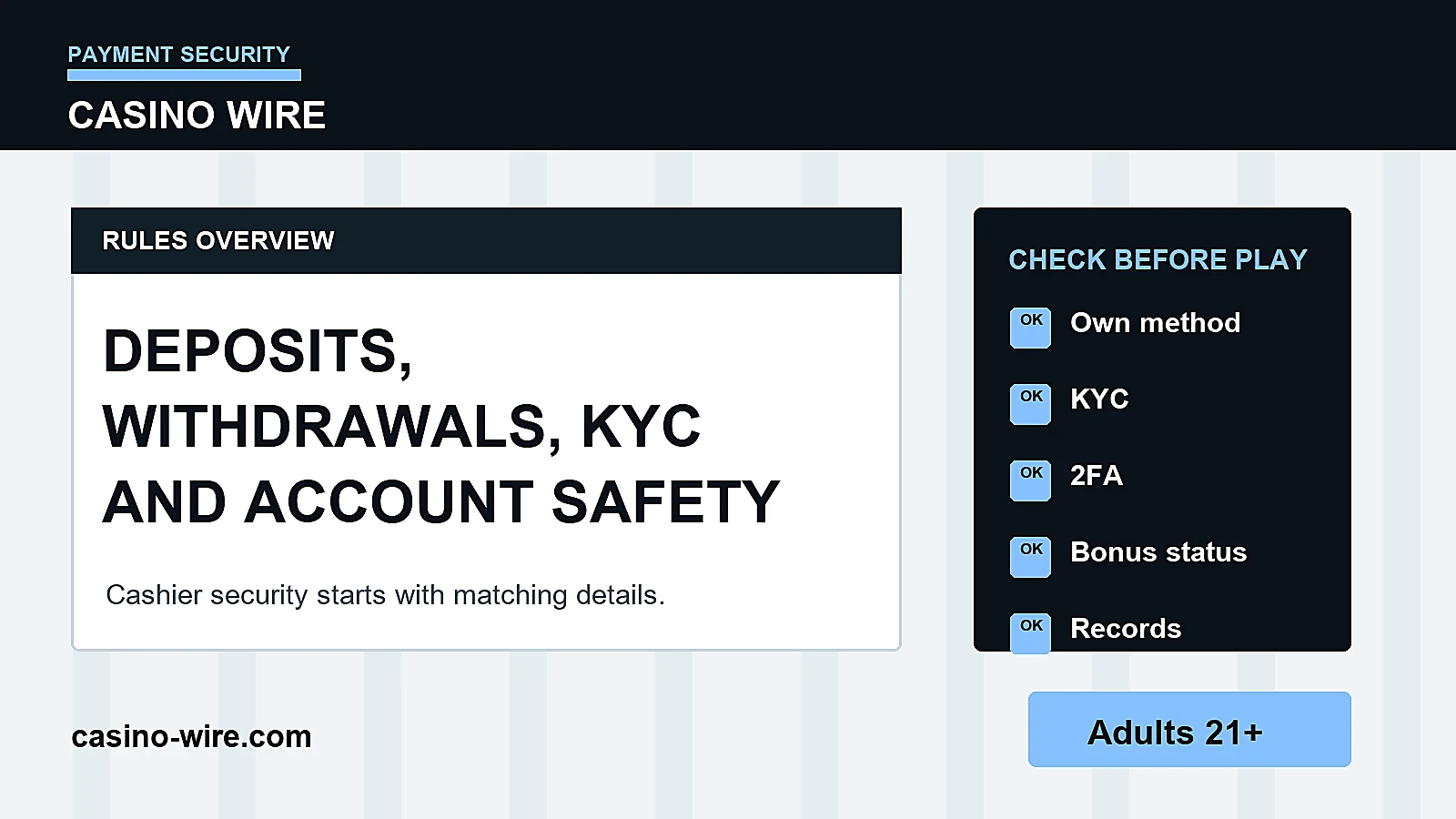
Use Payment Methods in Your Own Name
The simplest cashier rule is also one of the most important: use payment methods that belong to you. A debit card, bank account, e-wallet or other approved method should match the registered casino account holder. Using a friend or family member's payment method can create withdrawal delays, document requests or account restrictions.
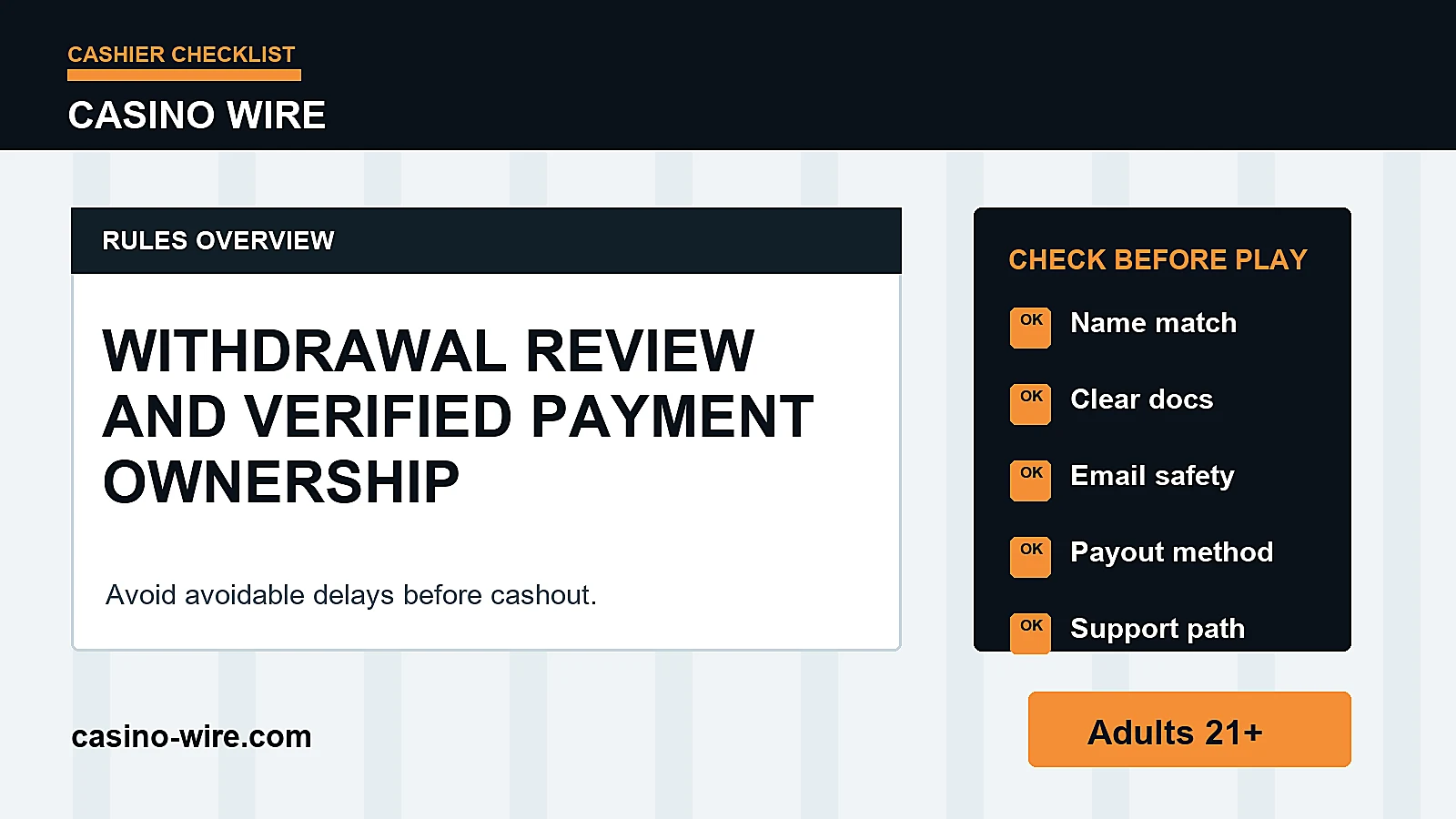
Name mismatches are a common source of payment friction because the operator may need to prove ownership before releasing funds. Even small differences can matter if the casino cannot connect the payment method to the verified customer. Use the same legal name format across the casino account, payment account and identity documents where possible.
If a payment method expires, is closed or no longer belongs to you, update the cashier before relying on it. Do not wait until a withdrawal is pending to discover that the destination cannot receive funds.
KYC Checks and Why They Happen
KYC means know your customer. In gambling, it usually includes identity verification, age checks, address confirmation and payment ownership review. The exact documents vary by operator and jurisdiction, but common requests include a government ID, proof of address or proof that a payment method belongs to the account holder.
KYC is not only a withdrawal obstacle. It helps prevent underage gambling, account misuse, fraud, money laundering and duplicate accounts. Some casinos verify early, while others request additional documents when a withdrawal is made or when account activity changes.
The best habit is to complete verification before a large withdrawal is urgent. Upload clear documents, make sure all corners are visible, avoid edited images and use current information. Blurry or incomplete uploads can turn a simple review into a longer delay.
Protect the Login Before Protecting the Cashier
Payment security depends on account security. Use a strong, unique password that is not reused from email, social media, banking or other casino accounts. If two-factor authentication is available, enable it. A cashier can only be as safe as the login that controls it.
Email security matters too because password resets and account notices often go through email. If someone can access the email account, they may be able to interfere with casino access. Protect email with its own unique password and two-factor authentication.
Avoid logging in on shared devices or public Wi-Fi when making deposits or withdrawals. If a session must be opened on a device that is not yours, log out fully and do not save credentials.
Deposits Are Usually Faster Than Withdrawals
Deposits often appear quickly because the operator is receiving funds. Withdrawals can take longer because the operator may review identity, payment ownership, bonus status, fraud signals and responsible gambling obligations before releasing money. A fast deposit does not mean every withdrawal will be instant.
Different payment methods also move at different speeds. Cards, bank transfers, e-wallets and other services may have separate processing windows after the casino approves the withdrawal. Weekends, holidays and manual reviews can add time.
Read the cashier page before choosing a method. Look for fees, minimum withdrawal amounts, processing times, supported currencies and whether withdrawals must return to the same method used for deposits.
Bonus Terms Can Affect Withdrawals
Payment security is not only about identity. Bonus terms can also decide whether a withdrawal is allowed. If a player accepts a bonus, wagering requirements, max bet rules, eligible games and expiry rules may need to be satisfied before bonus-related funds can be withdrawn.
A withdrawal request may cancel an active bonus on some sites. On others, real-money and bonus balances may be locked together until wagering is complete. The only safe approach is to read the offer terms before depositing, not after a win.
If the goal is a simple withdrawal path, declining a bonus can be reasonable. Clear cash play is often easier to understand than a promotion with several conditions.
Keep Records and Watch for Red Flags
Save confirmation emails, transaction IDs and screenshots of important cashier messages. These records can help if customer support needs to investigate a missing deposit, delayed withdrawal or rejected document. Keep the records private and do not share full card numbers or sensitive document images outside official support channels.
Be cautious with messages that claim to be from a casino but ask for passwords, full payment details or document uploads through unusual links. Use the official website or app rather than links in unexpected emails or messages. Phishing attempts often copy casino branding to create urgency.
If a support agent contacts you outside normal channels and asks for sensitive information, stop and verify through the official support page.
Bottom Line
Online casino payment security is built from small habits: use your own payment methods, keep account details accurate, complete KYC checks carefully, protect email and login access, read bonus terms and keep basic transaction records. None of those habits guarantee a win or make gambling risk-free, but they reduce avoidable cashier problems.
For adults 21 and over, the safest mindset is to treat deposits as entertainment spending and withdrawals as a regulated payment process. If the process requires review, respond with clear documents and avoid opening duplicate accounts or using mismatched payment methods.
A secure cashier is boring in the best way. The details match, the account is protected, the rules are understood and the player knows when to stop.