
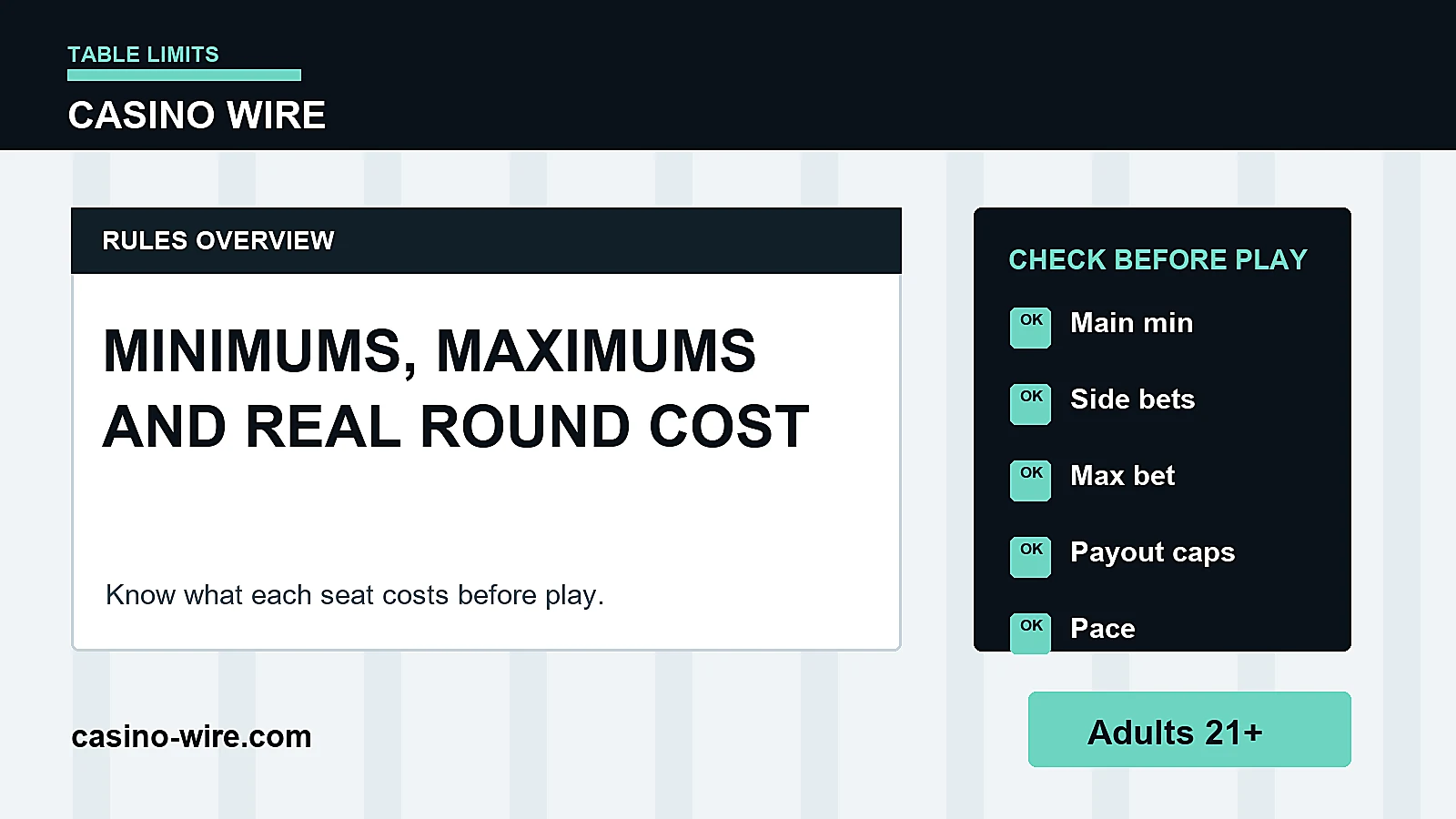
Casino table limits look simple at first glance. A blackjack, roulette, baccarat or live dealer table may show a minimum bet, a maximum bet and a few optional side bets. Yet those numbers shape the entire session. They decide how much each decision costs, how quickly a bankroll can move and whether a table actually fits the player's plan.
This guide is for adults aged 21 and over who want to understand table rules before sitting down. It does not promise a winning strategy and it does not turn side bets into smart investments. The goal is practical: read the table panel, understand the real cost per round and avoid choosing a game that is too expensive for the budget.
A table can be entertaining when the rules are clear and the stake is controlled. The same table can become stressful when the minimum is too high, side bets are added automatically or the pace of play is faster than expected.
Minimum Bets Decide the Starting Cost
The minimum bet is the lowest main wager allowed on the table. If a blackjack table has a 10 dollar minimum, every hand starts at 10 dollars before any doubles, splits, insurance or side bets. If a roulette table has a 5 dollar outside minimum but a separate inside minimum, the real cost depends on which bets are being placed.
Minimums can change by game type, time of day, table popularity and live dealer studio. A table that looks affordable at one moment may move higher during busy periods. Online lobbies may also show different minimums for standard, VIP, speed or private tables.
Players should compare minimums to the session bankroll. A 100 dollar budget lasts only ten rounds at a 10 dollar minimum if every round loses. That does not mean ten rounds will happen exactly, but it shows why the minimum matters before play begins.
Maximum Bets and Payout Caps
The maximum bet is the largest wager allowed on that table or bet type. Many casual players ignore maximums because they plan to bet small, but maximums still reveal how the table is designed. A high-limit table usually expects larger bankrolls and may move at a pace that feels different from low-limit play.
Some games also have payout caps. A side bet may advertise a large multiplier, but the rules may limit the maximum payout per round. Progressive jackpots, bonus wheels and rare side-bet outcomes can also have specific qualifying conditions.
The safe habit is to read both the bet limit and the payout rule. A headline payout is less useful than the complete rule that explains the qualifying hand, stake requirement and cap.
Side Bets Are Separate Decisions
Side bets are optional wagers placed beside the main game. In blackjack they may involve pairs, suited cards or dealer match outcomes. In baccarat they may involve pairs, perfect pairs or tie-related outcomes. In roulette they may appear as special layouts, hot-number prompts or feature bets.
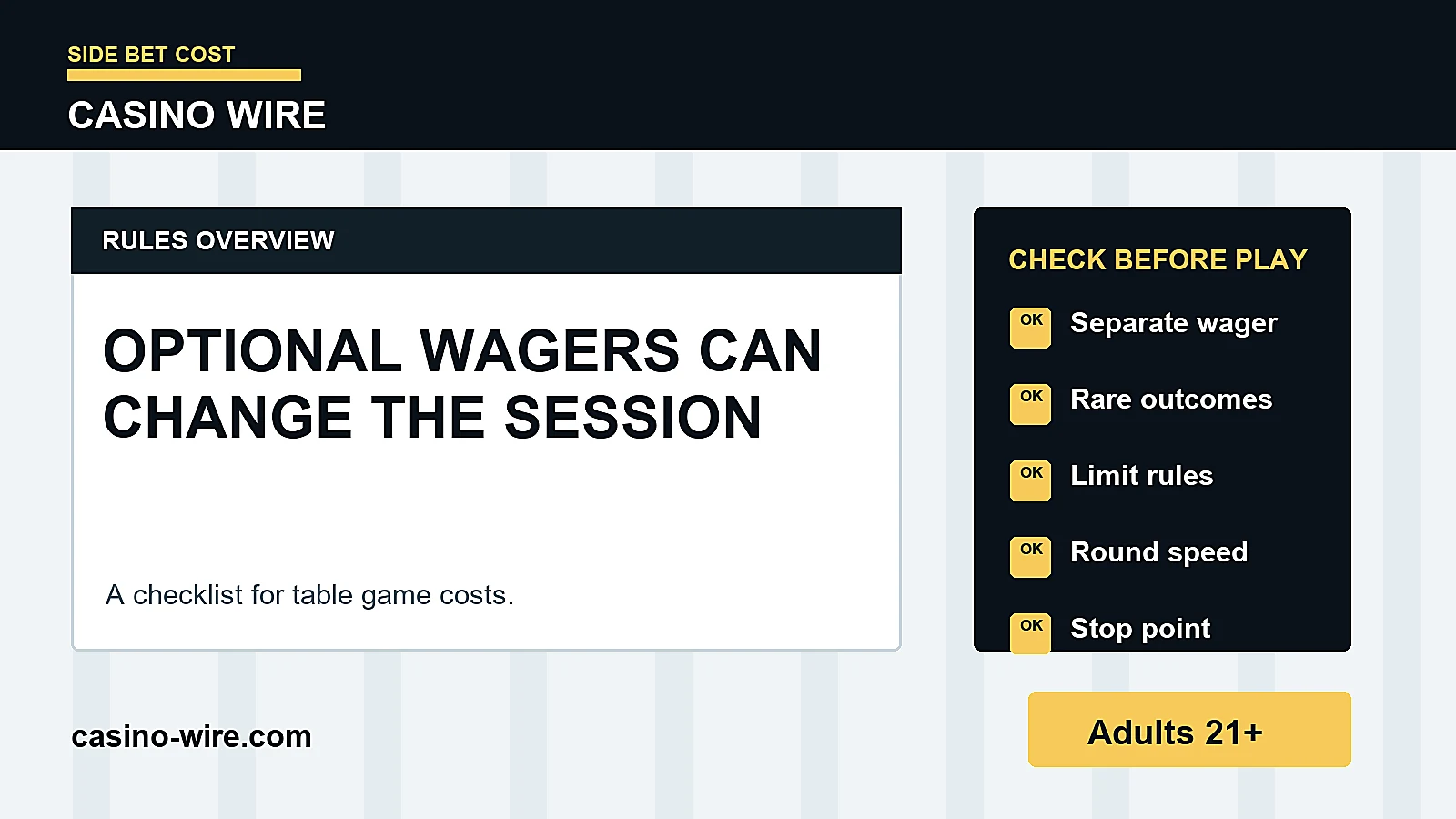
A side bet can make a round more exciting, but it usually changes the cost and risk profile. A player making a 10 dollar blackjack wager plus a 5 dollar side bet is not playing a 10 dollar round. The round costs 15 dollars when both wagers are placed. If that pattern repeats, the wagering volume rises quickly.
Side bets often pay more for rare outcomes, but rarity is the point. Treat them as entertainment add-ons, not as a required part of the main game.
Pace of Play Changes the Real Budget
Table limits should be judged together with speed. A slow roulette table and a fast blackjack table can produce very different wagering totals even if both have the same minimum. Live dealer games may include countdown timers, automatic decision windows and quick rebet buttons that keep the session moving.
The faster the table, the more often the minimum bet is paid. A small stake can still create a large total wagered amount when rounds happen quickly. This is especially important for players who use repeat bet buttons or leave side bets active without thinking.
Before starting, estimate the cost of a short session. If the table minimum is 5 dollars and the plan is 30 rounds, the main wager volume alone is 150 dollars. Side bets, doubles and splits can raise that number.
Rules That Change Table Cost
Blackjack rules such as double after split, surrender, dealer stands on soft 17 and number of decks can affect the game, but they can also affect decisions that require more money. Splitting pairs and doubling down may be correct in some rule sets, yet they increase the stake for that hand.
Roulette has its own cost details. American roulette has a double-zero pocket, while European roulette has one zero. Some tables offer en prison or la partage rules for even-money bets, but those rules are not universal. Baccarat commission, no-commission variations and tie payouts should also be checked.
The lesson is not to memorize every table rule at once. The lesson is to know that rules and limits work together. A table is not affordable only because the first chip is small.
A Simple Pre-Table Checklist
Before joining a table, confirm the main minimum, main maximum, side-bet minimums, side-bet maximums, payout caps and whether any optional wager is preselected. Then choose a session budget and a stop point before the first round.
If the table has fast play, reduce the stake or choose a slower table. If the side bet is the reason the game feels exciting, decide how many times it can be used rather than leaving it on forever. Optional wagers should stay optional.
Players should also avoid raising stakes only because the table has been cold. A losing streak does not make the next result due, and increasing stake size can turn a planned entertainment session into a chase.
Bottom Line
Casino table limits are not small print. They define the starting cost, the possible exposure and the pace at which money can move. Side bets add another layer because they are separate wagers with their own odds, limits and payout rules.
For adults 21 and over, the best approach is to read the table panel before playing: main minimum, side-bet cost, maximums, payout caps, speed and special rules. If the table does not fit the budget, choose another one or skip the session.
Clear limits make table games easier to enjoy. The aim is not to predict the next card, spin or shoe. The aim is to know exactly what each round costs before the decision is made.