
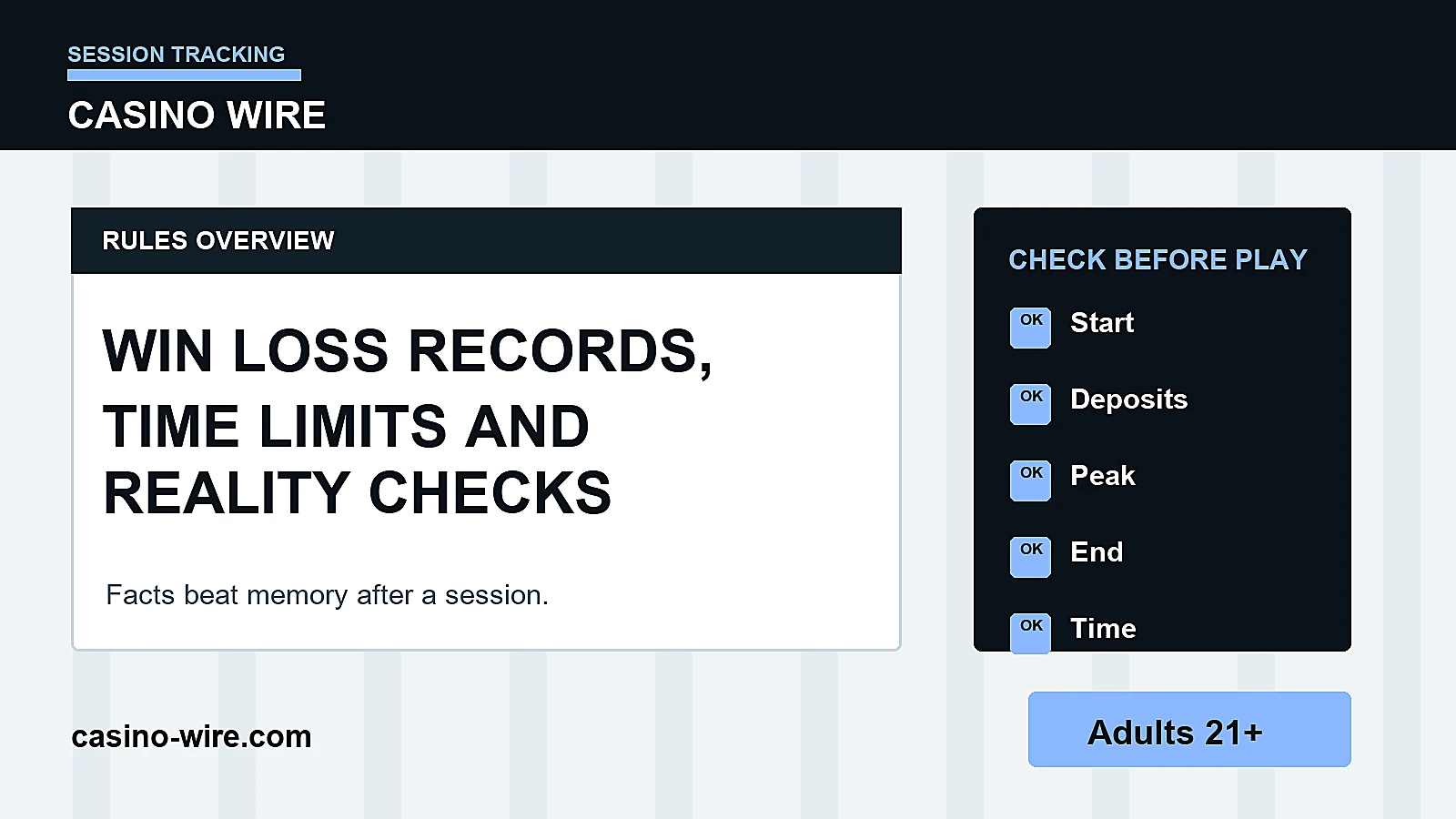
Casino session tracking is the habit of writing down what happened before memory starts editing the story. It can be as simple as noting the starting balance, ending balance, games played, time spent and whether the session stayed inside the planned limit. The point is not to make gambling feel like accounting. The point is to replace guesswork with facts.
This guide is for adults aged 21 and over. It does not suggest gambling as income, and it does not claim that tracking can overcome the house edge. Tracking helps players see patterns that are easy to miss: longer sessions than planned, frequent deposits, side bets that increase cost or wins that are quickly played back.
A record is useful because casino play can feel emotional in the moment. Wins stand out, losses can blur together and near misses can feel more meaningful than they are. A simple log brings the session back to numbers and decisions.
Record the Starting Point Before Play
The most important note happens before the first bet. Write down the date, planned budget, starting balance and time limit. If the session uses a casino account, note the balance before depositing or playing. If the session is in a land-based casino, note the cash amount set aside for entertainment.
This starting point prevents a common problem: judging the session only by the last few minutes. A player may remember a late recovery as a win even if the full session still ended down. Another player may remember a bad ending and forget that they were ahead earlier but kept playing past the stop point.
The record does not need to be complicated. A notes app, spreadsheet or paper notebook can work if it is honest and easy to update.
Track Ending Balance and Time Spent
At the end of the session, write the ending balance, total time played and final result. The result is the ending balance minus the starting balance plus or minus any deposits or withdrawals during the session. If extra money was added, record it clearly instead of folding it into the original budget.
Time matters because a session can be financially small but still unhealthy if it regularly takes more time than planned. A player who intends to play for 30 minutes but repeatedly plays for three hours has useful information to review, even if the amounts are modest.
Tracking time also shows which games create the fastest pace. Slots, speed tables, live dealer games and autoplay features can all change how quickly decisions happen.
Separate Wins From Withdrawals
A casino win is not fully protected until the player stops and withdraws or leaves with the money. Many players remember peak balance instead of final balance. If a 100 dollar deposit rises to 260 dollars and ends at 40 dollars, the session was not a 160 dollar win. It ended with a 60 dollar loss from the original deposit.
Tracking peak balance can still be useful, but it should not replace the final result. A useful log may include start, peak, stop point and end. That makes it easier to see whether wins are being locked in or repeatedly returned to play.
This habit is especially important after bonus features, jackpots, side bets or long live dealer sessions. Exciting moments can make the final number feel less clear than it is.
Watch for Deposit Patterns
A session log should show deposits separately. Multiple small deposits can feel less serious than one large deposit, but the total matters. Five 20 dollar deposits are still 100 dollars. Recording each one makes the true session cost visible.
Look for patterns over several sessions. Are deposits increasing after losses? Are withdrawals rare even after winning starts? Are sessions longer after a near miss or bonus round? These patterns matter more than one isolated result.
If the log shows repeated chasing, skipped limits or play with money needed for bills, the safest response is to stop gambling and use account tools such as deposit limits, time-outs or self-exclusion where available.
Use Categories That Explain Behavior
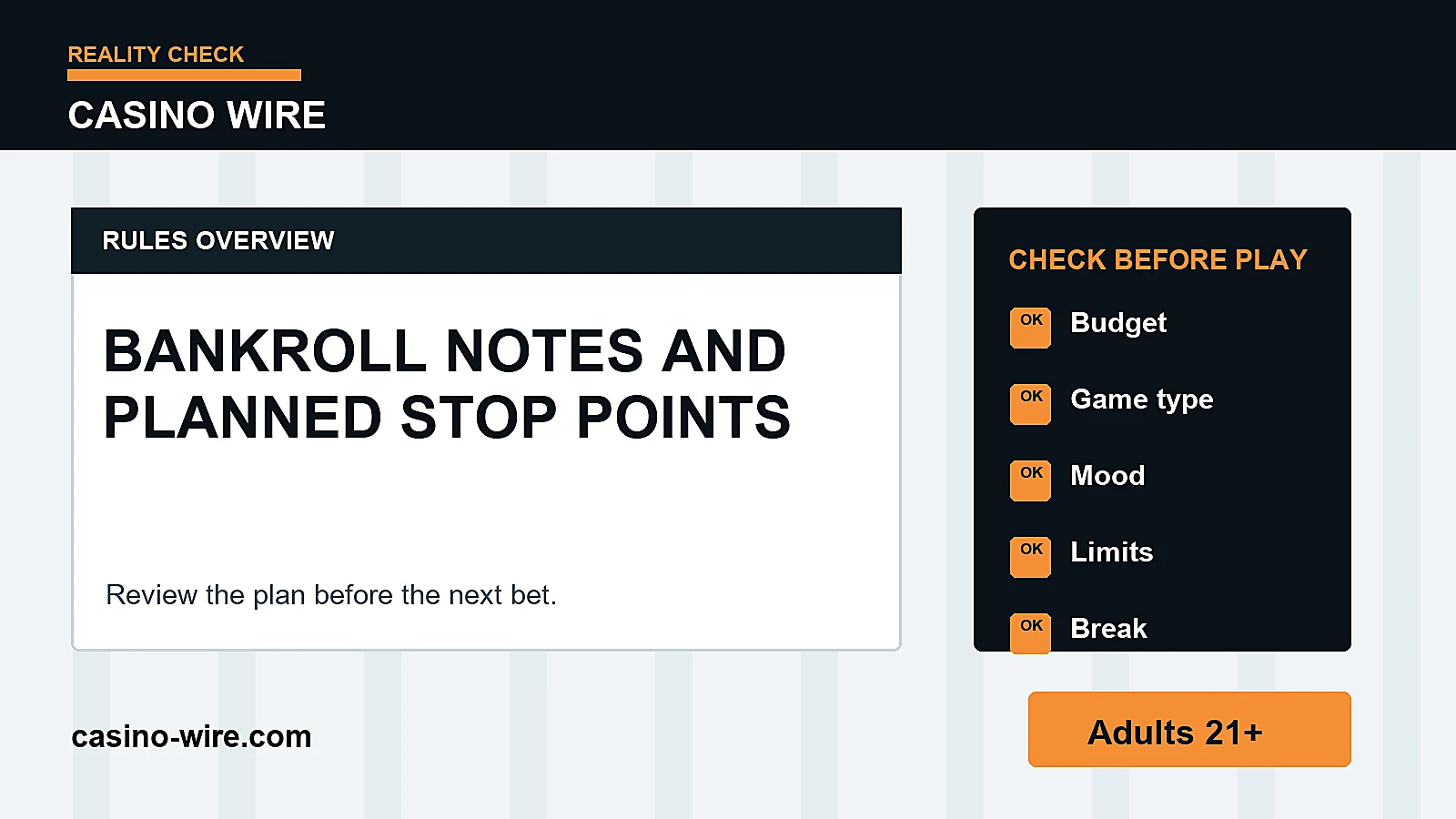
A good session log can include simple categories: game type, stake size, bonuses used, side bets used, autoplay used and mood before play. Mood is not a medical diagnosis. It is a practical signal. Playing while angry, bored, stressed or trying to recover losses can lead to different decisions than planned entertainment play.
Bonus tracking is also useful. If a session included a promotion, record wagering requirements, expiry time, maximum bet rules and whether the bonus was completed or cancelled. Promotions can change how players behave because the balance may feel less flexible.
The log should be short enough to keep using. A perfect spreadsheet that is abandoned after two sessions is less valuable than a simple five-line note used every time.
Reality Checks and Review Points
Many regulated casino sites offer reality checks, deposit limits, loss limits, session reminders and time-outs. These tools work best when paired with the player's own records. A reality check is easier to respect when the session log already shows the planned stop time.
Set review points before play. For example, pause after 20 minutes, after a 50 percent budget loss or after a balance doubles. The pause is not a prediction tool. It is a decision point where the player can choose to stop while thinking clearly.
If a player cannot follow review points, that is important information. The answer is not a more detailed log. The answer may be a stronger limit, a break or outside support.
Bottom Line
Casino session tracking gives players a factual record of budget, time, deposits, withdrawals, game choices and final results. It does not remove risk or change the odds. It makes the risk easier to see.
For adults 21 and over, the best log is simple: starting balance, planned budget, time limit, game type, deposits, ending balance and a short note about whether the plan was followed. Review several sessions together rather than judging only one result.
The most useful number is not the biggest win shown during play. It is the final outcome after the session ends. Clear records make it easier to stop, take breaks and treat gambling as entertainment rather than a problem to solve with the next bet.