Money held in an online gambling account can look like money in a bank account, but the legal and financial protections are not necessarily the same. If an operator becomes insolvent, the return of customer balances depends on local law, the operator’s arrangements, the accuracy of its records and the insolvency process.
Licensing can require operators to disclose how they protect customer money. That disclosure helps players compare risk, but no label should be read as a universal government guarantee. The UK Gambling Commission explicitly warns that gambling balances are not protected like personal bank deposits and that separation of funds does not ensure full repayment.
What counts as customer funds
Customer funds can include deposited money, cleared winnings and amounts awaiting withdrawal. Unsettled wagers, bonuses, loyalty points and promotional credits may be treated differently under the terms and applicable rules.
A clear operator policy should explain when a win becomes part of the withdrawable balance and how pending transactions are recorded. Players should not assume that every number displayed in a wallet has the same legal status.
The regulator’s definition matters because protection requirements apply to defined funds, not to every possible claim a customer may have against the business.
Segregation is not deposit insurance
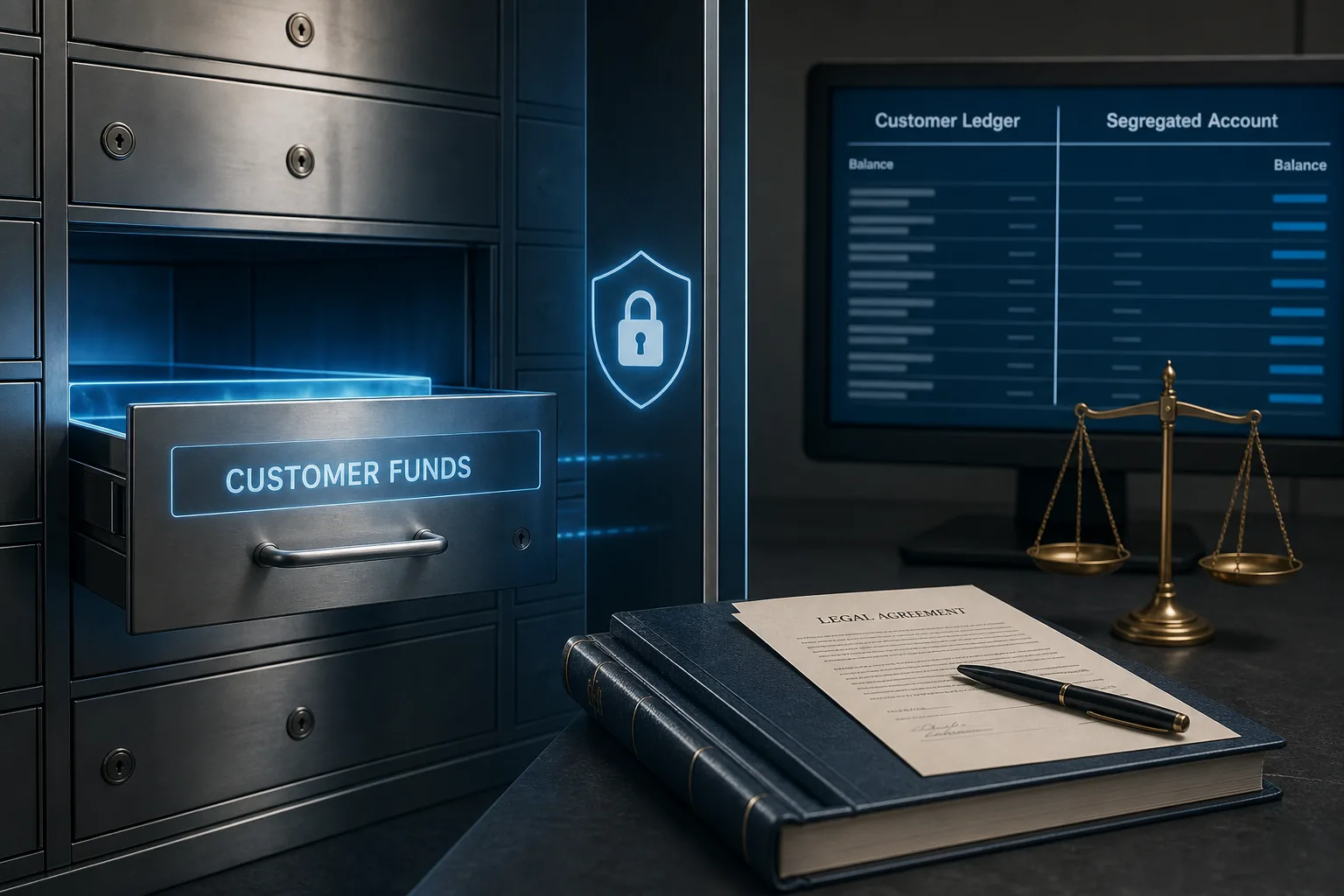
Segregation generally means that customer funds are held separately from ordinary operating money. This can reduce the chance that day-to-day business expenses consume player balances and can make records easier to identify during insolvency.
It is not identical to a bank deposit guarantee. The structure of the account, trust or insurance arrangement determines whether insolvency practitioners and other creditors can access it. Administrative costs, legal disputes and shortfalls can affect repayment.
Players should read the operator’s current disclosure rather than relying on a general statement that funds are “safe” or “ring-fenced.”
Different protection models
The UK framework uses categories that describe the level of protection if a business fails. At the lowest level, money may be kept separately but not be protected from insolvency. Higher arrangements can involve insurance, an independent trust or another legally recognized structure.
The exact wording and categories can change, and other jurisdictions use different systems. Compare operators only within the same regulatory framework and confirm the definition on the regulator’s official site.
A higher category can reduce risk but cannot eliminate operational error, fraud, legal delay or a disputed balance.
Disclosure before and during play
Operators should make the customer-funds policy available in terms that can be understood before money is deposited. In Great Britain, updated rules require periodic reminders to customers who hold funds where the stated arrangement does not protect them in insolvency.
Read the notice rather than clicking through automatically. Identify the legal operator, protection category, location of the explanation and date of the terms. A brand may change ownership or licence entity, so an old review may no longer describe the current arrangement.
If the disclosure is missing, contradictory or impossible to locate, ask support in writing before depositing.
Early warning signs
Slow withdrawals do not prove insolvency; verification, payment networks and account reviews can cause delays. Concern increases when unexplained delays affect many customers, payment methods disappear, published timeframes are repeatedly missed and the operator stops responding through official channels.
Other signals include a regulator suspending a licence, a formal company filing, an administrator’s notice or the casino announcing a market exit without a clear withdrawal plan. Rumors and anonymous social posts should be checked against primary records.
Do not add another deposit to “unlock” a withdrawal. Requests for a special tax, insurance payment or cryptocurrency transfer to release funds are common scam patterns.
What players should save
Keep screenshots or downloads showing the account balance, pending withdrawals, transaction history, open wagers and bonus status. Save the applicable terms, customer-funds disclosure, licence details and correspondence. Record dates, round IDs and complaint references.
Evidence should be collected through the normal account interface without trying to access restricted systems. Store it securely because it contains financial and identity information.
An insolvency practitioner may later request proof in a specified format. Following the official claim process is more useful than sending documents to unverified recovery agents.
Withdrawals and open wagers
When a business closes in an orderly way, it may stop accepting deposits and wagers while allowing a period for withdrawals. Open bets can be settled, voided or transferred according to the rules and regulator-approved plan. Insolvency can produce a less orderly result.
A pending withdrawal may still form part of the customer claim if the payment was not completed. The payment provider can confirm whether money entered its network, but it cannot rewrite the operator’s account ledger.
Chargebacks are not a universal solution and can be inappropriate for legitimate settled gambling transactions. Ask the payment provider about its rules and obtain legal advice where the amount justifies it.
Regulator and insolvency roles
A gambling regulator can suspend licences, set compliance requirements and publish information. It does not necessarily administer the failed company or reimburse balances. An appointed administrator, liquidator or court process usually handles creditor claims.
Use the regulator’s official website to verify notices and the identity of any officeholder. Submit a claim only through confirmed channels. Recovery scammers may imitate administrators and ask for upfront fees or wallet credentials.
Alternative dispute resolution may help with a pre-insolvency account dispute, but its role can be limited once a formal insolvency process begins.
Reducing exposure
An online casino wallet is not a savings account. Withdraw money that is not intended for a planned entertainment session and avoid leaving a large balance merely for convenience or loyalty status. Review the protection disclosure when the operator sends an update.
Use licensed sites, but remember that licensing manages risk rather than abolishing it. A strong protection arrangement, transparent terms and timely withdrawals are preferable to a high promotional balance held under weak protection.
The essential distinction
The important question is not only whether customer money is separated. It is whether the legal arrangement protects it from the operator’s creditors if the business fails, and what limits or conditions apply.
Players cannot control an operator’s solvency. They can limit the balance left on account, keep reliable records and respond through verified regulatory and insolvency channels. Treat every gambling balance as exposed funds until it reaches a payment account under protections you understand.
The same caution applies when a brand is sold or migrated to another platform. A transfer announcement should identify the legal entities, treatment of balances, privacy consequences and any action required from customers. Verify the notice on both the operator’s and regulator’s official channels before accepting new terms or supplying documents.