
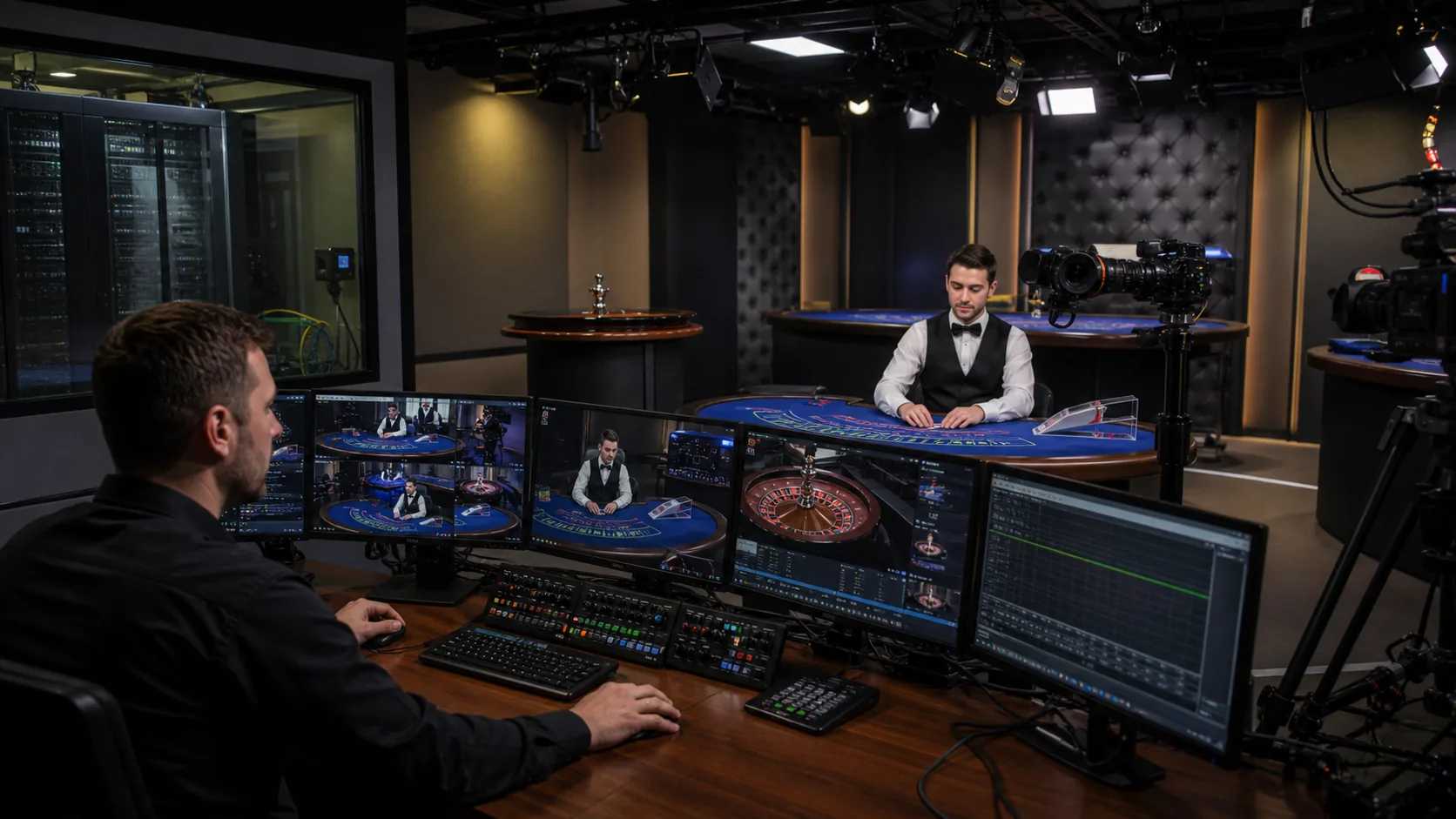
A live dealer casino game is not simply a video call pointed at a table. It is a regulated gambling system that connects physical cards, wheels or other equipment with cameras, trained staff, account software and a digital betting interface. The visible dealer is one part of a controlled process that must translate table events into accurate online settlements.
Standards differ across markets, but Great Britain’s Remote Gambling and Software Technical Standards provide a useful public model. RTS 17 says live dealer operations must be fair and independently auditable. Its guidance addresses commercial-quality equipment, staff training, supervision, surveillance, secure areas, game logs and statistical analysis.
Those controls do not guarantee a player will win and do not eliminate the house edge. Their purpose is narrower and more important: the game should follow documented rules, the physical action should be captured accurately, access should be controlled and enough evidence should exist to investigate irregular events.
The Studio Floor
A live studio can contain many tables operating at once, each arranged for the camera and game type. Lighting must make cards, wheel pockets, chips and dealer actions visible without hiding important details in glare. Equipment and consumables should be suitable for commercial casino use, while designated staff monitor their integrity and replace damaged items under controlled procedures.
The studio may be dedicated to one operator or provide tables to several brands, but branding does not determine regulatory responsibility. The licensed business serving the player remains responsible for the gambling it offers, and software used in the licensed market must meet applicable supply and licensing conditions. A polished stream is therefore not evidence of compliance by itself.
Dealers Follow Documented Procedures
Dealers are trained to run the table according to the published rules and studio procedures. That includes shuffling or loading cards, announcing betting windows, handling invalid actions, presenting outcomes and responding when equipment fails. Refresher training matters because game variants, studio tools and compliance expectations can change.
The dealer does not decide which online bets to accept or alter an account balance manually. Betting software closes the wagering window and records eligible instructions. The physical result is then captured and passed to the game system for settlement. Separating these roles reduces the opportunity for one person to control the entire transaction.
Cameras and Result Capture
Multiple cameras can serve different functions: a broadcast view for players, close views of cards or a wheel, and surveillance coverage for audit. Depending on the product, result capture may combine trained staff input, card-reading hardware, optical recognition or sensors. The system must connect the detected physical result with the correct table and game round.
Players should distinguish a delayed stream from a delayed result. Networks add latency, so interfaces use a defined betting cutoff before the dealer acts. A wager transmitted after that cutoff may be rejected even if the player’s video appears to show time remaining. Clear timers and rules are essential because the platform, not the player’s local picture alone, records acceptance.
Supervision and Secure Areas
RTS 17 calls for staff to supervise dealer activity and integrity. Surveillance should cover predefined gaming areas with enough detail to confirm whether procedures and rules were followed. Supervisors can respond to incorrect card handling, a wheel obstruction, equipment damage or a mismatch between the table and the digital record.
Access controls protect tables, card storage, shoes, equipment rooms and technical systems from unauthorised entry. Roles should be separated and actions recorded. A studio also needs incident procedures for pausing a table, preserving evidence and deciding how affected rounds will be handled under the rules rather than improvising after a complaint.
Game Logs Make the Table Auditable
The studio and platform maintain records that can connect a round identifier with the table, time, betting window, accepted wager, physical outcome and settlement. RTS guidance also calls for game events to be collected into statistics that can reveal trends related to game performance, staff or locations on the studio floor.
A statistical alert does not automatically prove cheating or a defective wheel. It prompts review. Investigators can compare logs, video and equipment records to determine whether the pattern has an ordinary explanation or requires correction. For a player, the round ID and timestamp are therefore more useful in a complaint than a general statement that the table looked suspicious.
What Happens When Something Goes Wrong
Published rules should explain misdeals, unreadable cards, wheel faults, connection interruptions and void rounds. A table may be paused while a supervisor checks video or equipment. Depending on the event and rules, an accepted wager can be settled from the confirmed result, returned as a void bet or handled through another disclosed procedure.
The correct result should come from records, not from chat opinion or the dealer’s popularity. Players should save the table name, round ID, stake and timestamp, then use formal support if the settlement appears wrong. Repeatedly wagering while the same technical issue continues can make the dispute larger and harder to isolate.
Operator, Studio and Supplier Responsibilities
The company filming the table, the software supplier and the casino brand can be separate businesses. Contracts divide operational tasks, but the licensed operator offering the game cannot treat outsourcing as an escape from its duties. It should know which studio and software are used, how incidents are reported and which records can be obtained for a complaint or regulator.
Players do not need to map every commercial relationship before betting, yet the distinction helps when support redirects a question. The complaint should normally begin with the casino that accepted the wager. That operator can obtain studio video, provider logs or technical analysis through its supplier arrangements and give the player one accountable response under its complaints process.
How to Assess a Live Table
Check that the exact casino domain is licensed for the player’s location and that the game rules, minimum and maximum stakes, payout table and side-bet terms are available before betting. The interface should show the accepted stake and final result clearly. A named game supplier is useful context, but the operator’s licence remains the key public check.
Observe the pace before joining. Live tables can create social pressure, but no other player or dealer can make a result due. Side bets often carry different odds and can increase the cost of each round. Set a spending and time boundary outside the stream, where countdowns and conversation cannot turn a planned pause into another wager.
Bottom Line
A live dealer casino studio combines a physical table with a technical transaction system. Fair operation depends on trained dealers, controlled equipment, secure access, supervision, surveillance, accurate result capture and logs that allow a disputed round or unusual pattern to be reconstructed.
The stream makes the game visible, but visibility is not the same as regulation. Adults should verify the operator, read the rules and keep round details when reporting a problem. The controls support integrity; they do not change the mathematical advantage or make losses recoverable through continued play.
For adults 21+ only. Gambling should be treated as entertainment, not income. Set spending and time limits before play.
Primary source: UK Gambling Commission – RTS 17 Live dealer studios
Primary source: UK Gambling Commission – Remote technical standards
Primary source: UK Gambling Commission – Gambling software condition