
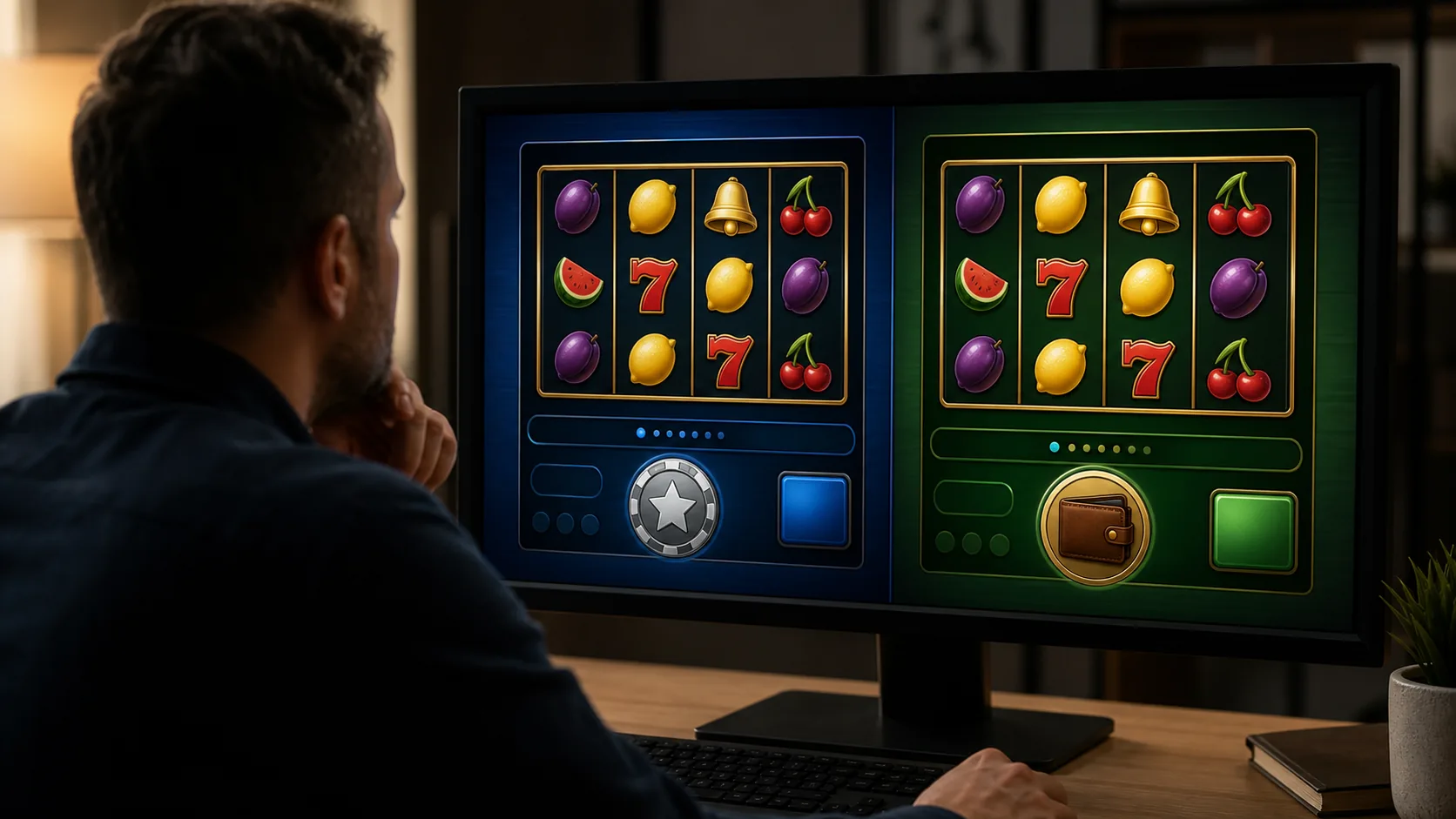
Casino demo mode lets an adult open a game with virtual credits instead of depositing money. It can be useful for learning controls, paytables and feature flow, but it is not a forecast of what will happen after switching to real-money play. A short practice session can win heavily or lose quickly by chance.
In a regulated market, a corresponding free-play game should not be engineered to create a false impression that winning is easier. Great Britain’s RTS 6 requires play-for-free games on the same gambling facilities to use the same game rules and accurately represent the likelihood of winning and prize distribution in the play-for-money version.
That standard still leaves practical questions. A supplier can have several versions of a title, the demo may sit on a different website, and virtual credits change the emotional and financial experience. Players need to compare the exact versions and understand what a practice balance can and cannot demonstrate.
The Rules Should Correspond
A demo offered alongside a real-money game should reproduce the rules that determine outcomes and prizes. Reel layout, symbol values, paylines or ways to win, feature triggers, bonus rules and payout relationships should not quietly become more generous in practice mode. Virtual currency labels can differ, but the underlying allocation of rewards should remain proportionate.
Players should open the information or help screen in both modes. Compare the game title, provider, version, return information where shown, paytable and optional features. If one mode offers a feature purchase, jackpot or bet configuration that the other lacks, it may not be the corresponding version and should not be used as a direct comparison.
How Random Outcomes Should Be Produced
RTS guidance says a free-play version should use the same random-number generator as the money game, another RNG that meets the applicable random-outcome standard, or a suitable public RNG expected to have no systematic bias. The critical point is not that both modes produce the same sequence; independent random play should not do that.
The requirement is that the alternative outcome method accurately represents the probabilities rather than inserting extra wins. A player cannot verify this from dozens or even hundreds of spins. Random results naturally cluster, and short samples vary widely. Compliance depends on design, testing and monitoring, not an individual’s practice balance ending near a theoretical percentage.
Prize Distribution Matters as Much as RTP
Two games can show a similar long-term return while distributing prizes differently. One may deliver many small returns, while another concentrates value in rare features. A demo that preserves only the headline RTP but produces bonus rounds far more often could still mislead a player about the experience of the real-money product.
British guidance therefore refers to both the likelihood of winning and prize distribution. Virtual-cash payouts should match the corresponding money game’s proportional stakes and prizes. Promotional demonstrations designed mainly to show features, especially on a supplier site, should be identified clearly when they use higher-than-normal returns or edited footage.
Why a Demo Session Feels Different
Virtual credits remove financial loss, which changes decisions. A player may choose larger stakes, continue longer or buy expensive features without the hesitation that real money creates. Practice can teach navigation, but it cannot reproduce the stress, chasing behaviour or budget pressure that may appear when a personal balance rises and falls.
A large virtual win is not stored luck and does not make the money version due to repeat it. Switching modes starts or continues play under the platform’s random system; the demo did not train the reels or improve the next outcome. The most useful lesson is whether the rules and pace are understandable, not whether the practice account made a profit.
Check That the Versions Really Match
Start with the exact casino domain and game information panel. Record the supplier, game title and version number if available. Compare the paytable, available stakes, jackpot eligibility and return information. Some operators or markets can use different approved configurations of the same visual title, so matching artwork alone is not enough.
A demo hosted on a supplier’s promotional site may be designed differently from a game on a licensed casino. RTS 6 specifically addresses corresponding games offered on the same facilities and calls for clear disclosure when a separate demonstration is designed to show bonus features. Treat external demos as product previews unless the supplier confirms the configuration.
What Demo Mode Is Good For
Practice mode can reveal the control layout, minimum and maximum virtual stake, paytable, animation speed and the mechanics of bonus features. It is also a low-pressure way to find whether rules are accessible and whether the interface reports wins and losses clearly. Those are valuable checks before any financial decision.
It can also expose confusion. If a player cannot explain the stake, winning combinations or feature cost after using the demo, real-money play will not make the product safer. Choose a simpler game or stop. A responsible test ends when the information is understood; it is not a challenge to build a virtual bankroll or discover a supposed winning pattern.
What Demo Mode Cannot Prove
A demo cannot prove that a future money session will win, that the player can tolerate losses or that withdrawals will be fast. It does not test account verification, payment rules, bonus terms, geographic eligibility or customer support. Those belong to the operator relationship, not the game simulation.
It also cannot establish fairness from personal observation. A sequence that looks generous may be random, and a cold sequence may also be random. Verify the casino’s licence and use published testing or regulatory information rather than online claims that a handful of spins reveal a rigged or unusually loose mode.
Promotional Videos Are Not a Playing Sample
A trailer can compress minutes of play into a few seconds and show only bonus features. British guidance says edited or sped-up footage should be made clear, and a supplier demonstration with higher-than-normal returns should be identified as a feature demonstration. Attractive footage therefore should not be read as a record of ordinary frequency.
Use the actual help screen and corresponding playable demo instead of estimating probabilities from an advertisement. Even an unedited jackpot clip proves only that the event exists, not how often it occurs. Marketing can explain a theme or mechanic, but the rules and approved configuration determine the gambling product offered to the player.
Bottom Line
A corresponding casino demo should represent the real-money game’s rules, winning likelihood and prize distribution accurately. The RNG does not need to repeat the same results, but the free-play outcome method should not contain a systematic bias that makes the money game look easier than it is.
Use practice to learn mechanics and compare exact versions, never to predict returns. Confirm the licence, paytable and configuration before risking funds, then set limits independent of the virtual result. Adults who feel more confident because of a demo win should treat that confidence as a warning, not an advantage.
For adults 21+ only. Gambling should be treated as entertainment, not income. Set spending and time limits before play.
Primary source: UK Gambling Commission – RTS 6 Play-for-free games
Primary source: UK Gambling Commission – RTS 7 Random outcomes
Primary source: UK Gambling Commission – Testing strategy