
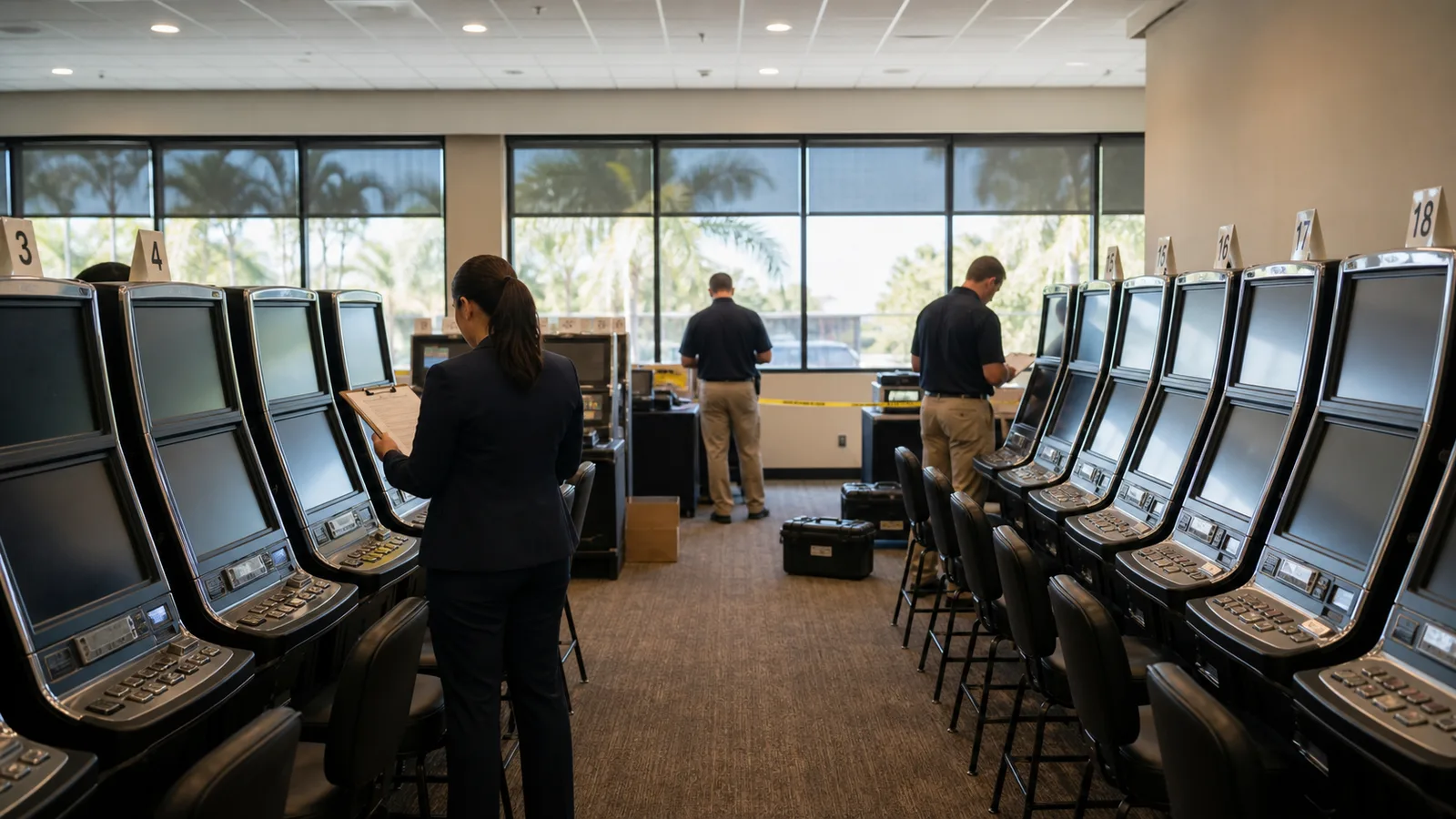
The Florida Gaming Control Commission and the Cape Coral Police Department seized 60 illegal slot machines from Uptown Bingo in a joint enforcement action, the state regulator announced August 17. The commission said the business operated under the appearance of a lawful bingo establishment while offering electronic devices that functioned as illegal slot machines.
The case carries a broader warning for Florida venues: calling a machine bingo does not determine whether it is legal. Regulators examine how a device actually operates, including the role of chance, consideration and prizes. A bingo theme or label cannot shield equipment that meets the legal characteristics of an unauthorized slot machine.
What Authorities Reported
FGCC said the Cape Coral operation resulted in the seizure of 60 machines. The agency worked with local police, reflecting the division of responsibility between the statewide gambling regulator and law-enforcement authorities that investigate possible criminal activity and secure physical evidence.
The announcement identifies the equipment and the location but does not by itself establish a criminal conviction against every person connected with the business. Seizure is an enforcement step. Any charges, civil action or final forfeiture should be reported from subsequent official records rather than inferred from the removal of the machines.
Why Bingo Branding Is Not Enough
Florida permits some forms of bingo when statutory conditions are met, but a lawful bingo game has rules and organizational requirements that differ from electronic slot play. Authorities look beyond marketing language to the substance of the transaction and the way a winner is determined.
If a customer pays to activate an electronic device and the device awards value based predominantly on chance in a slot-style format, a sign describing it as bingo may not change the legal analysis. That principle is central to the Cape Coral announcement and to the regulator's wider effort against businesses using charitable or social-game language as a cover.
Florida's Limited Slot-Machine Framework
Commercial slot-machine gaming in Florida is restricted to specifically authorized settings. The state does not offer a general licence allowing ordinary arcades, cafés or bingo halls to install casino-style slots. Operators cannot assume that a machine is legal because it is sold by a distributor or because similar equipment appears at another venue.
The commission advises businesses to evaluate devices before placing them into service. Machine software, payout method and promotional presentation all matter. A device can create legal exposure for an owner, operator or other participant even when it uses credits, gift cards or other substitutes instead of directly dispensing cash.
Why Physical Seizure Matters
Removing machines interrupts the availability of the suspected gambling product and preserves evidence for technical examination. Investigators can review game logic, payment systems, records and the relationship between wagers and prizes. Those details are more reliable than the name printed on a cabinet or the description given to customers.
The action also sends a market-wide signal. A venue that invests in dozens of electronic devices can create the appearance of an established business, but scale does not create legality. Enforcement against a 60-machine operation shows that authorities are prepared to target the infrastructure, not only individual play.
Risks for Consumers
Players using an illegal machine may have fewer practical protections if a prize is withheld or a device is manipulated. The equipment may not have passed the independent testing and regulatory controls applied to authorized gaming products. Customers may also misunderstand the legality of the venue when it presents itself as bingo.
The safer approach is to verify that gambling is offered by an authorized operator and that the product is permitted in the jurisdiction. A busy venue, professional cabinet or posted set of house rules is not proof of regulatory approval. Consumers can report suspected illegal gambling to the appropriate Florida authorities.
What Businesses Should Learn
Venue owners should obtain qualified legal and compliance advice before installing devices that accept payment and award prizes. They should keep documentation showing how a product works, who supplies it and why it fits within a lawful category. Reliance on a vendor's sales claim is not a substitute for understanding Florida law.
Businesses that genuinely conduct bingo must also follow the rules applicable to that activity. Mixing authorized games with unauthorized electronic devices can create risk for the entire operation. Internal review should focus on actual game mechanics and payments, not on cosmetic changes to a screen or cabinet.
What the Case Does Not Yet Establish
The regulator's release confirms the seizure and its view that the machines were illegal. It does not identify a completed prosecution, a final forfeiture order or the outcome of any defense that may later be raised. CasinoWire will distinguish those later legal stages from the initial enforcement action if official records are published.
That restraint protects accuracy without weakening the compliance lesson. Equipment can be removed while an investigation continues, and businesses may challenge aspects of the action through available legal procedures. The correct present-tense description is that authorities seized 60 machines and classified them as illegal slots, not that every related allegation has already produced a conviction.
Bottom Line
Florida regulators and Cape Coral police seized 60 illegal slot machines from Uptown Bingo and used the action to emphasize that electronic slot-style gambling does not become lawful merely because it carries bingo branding. The classification depends on function, not the label chosen by an operator.
The seizure is a verified enforcement event, while any later charges or court outcomes remain separate matters. Other Florida venues should treat it as a compliance warning: review game mechanics before installation, confirm that products are authorized and do not assume that a familiar gambling term changes the law.
More CasinoWire coverage: Legal News.