
Jackpotbet A/S has been declared bankrupt, bringing its Danish licences for online casino and betting services to an end and sending customers with money held by the operator into a formal trustee process. The Danish Gambling Authority announced the development on August 21, confirming that the company had been declared bankrupt on June 18, 2026.
The immediate licensing result is clear, but the wider issue is more complicated. A regulated gambling account can look like a protected balance to the customer, yet insolvency law determines how that money is treated when an operator fails. Denmark is also awaiting a Supreme Court ruling in a separate operator bankruptcy that could clarify how strongly player funds are separated from claims by other creditors.
Licences Ended as a Consequence of Bankruptcy
The regulator said Jackpotbet's licences to offer online casino and betting in Denmark have been revoked as a result of the bankruptcy. That removes the legal authority under which the business could accept customers, take wagers or operate the licensed services. Bankruptcy therefore creates an operational stop as well as a corporate and financial proceeding.
Licence revocation in this setting is different from a disciplinary sanction imposed after a compliance investigation. The authority's notice ties the loss of permission directly to the insolvency outcome. Customers should not read the former existence of a licence as evidence that the platform can continue taking deposits or processing gambling after the bankruptcy declaration.
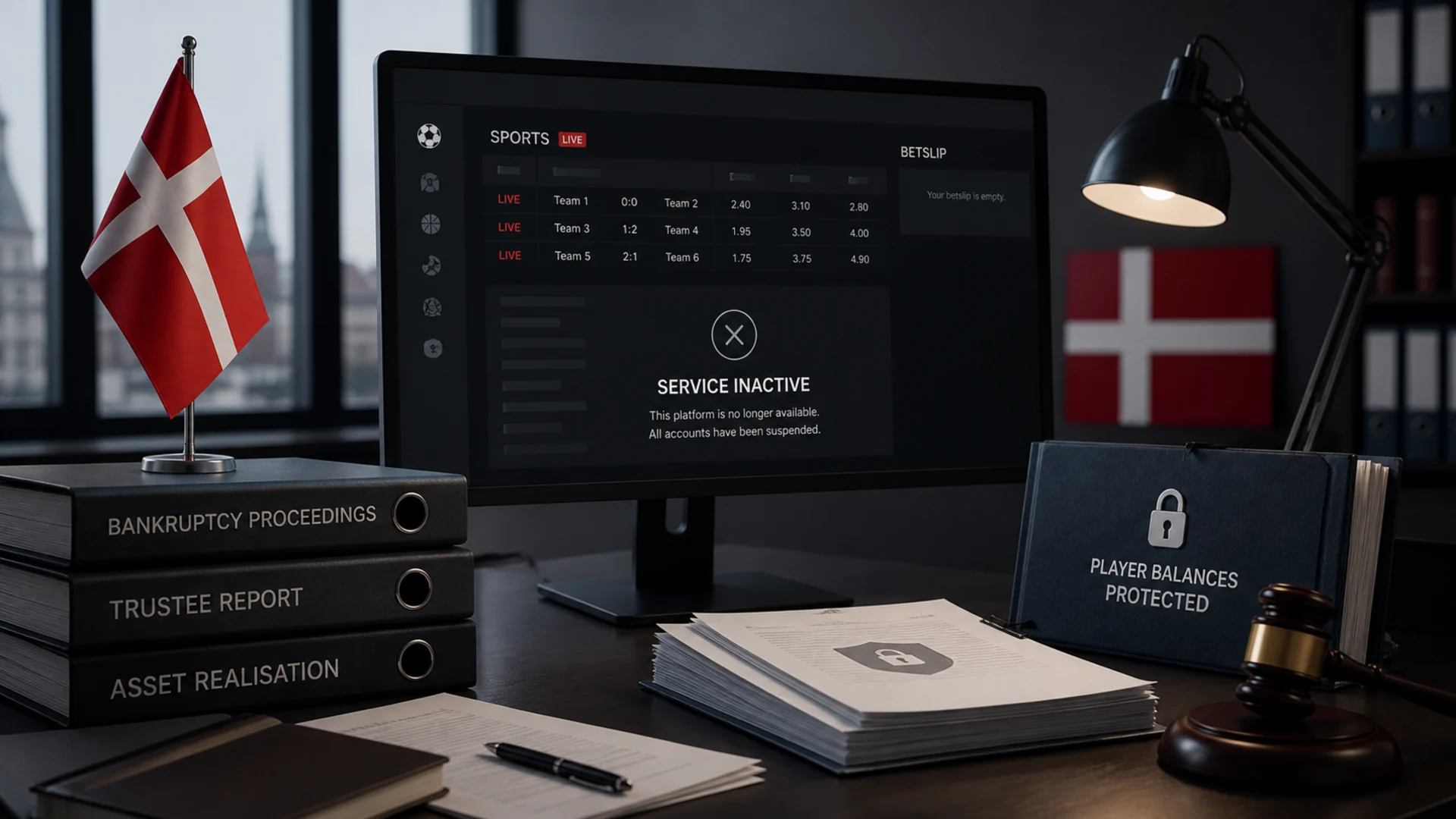
Players Are Directed to the Appointed Trustee
Customers who still have funds in a Jackpotbet account, or who need information about the bankruptcy process, have been directed to the appointed trustee, DLA Piper Denmark Advokatpartnerselskab. The trustee is responsible for administering the estate, identifying assets and claims, and communicating the process that affected customers must follow.
That referral matters because the gambling regulator does not itself operate the estate or distribute the company's remaining assets. A player seeking repayment may need to provide evidence of the account and balance through the trustee's claims procedure. Screenshots, account statements, transaction histories and prior correspondence can help establish what the operator's records should show.
A Licensed Account Is Not the Same as a Bank Deposit
Customers may naturally assume that money visible in a regulated gambling account remains immediately available. The practical position depends on the operator's safeguarding arrangements and the legal status of those funds. Gambling regulation can require controls over customer money, but it does not automatically turn every balance into a government-guaranteed bank deposit.
The distinction becomes critical only when ordinary withdrawals stop. Before insolvency, the account interface may show a precise amount and a familiar cash-out button. After insolvency, the same balance can become part of a legal question about ownership, segregation and priority. Clear licence disclosures should explain the level of protection before customers deposit, not after a failure occurs.
The Separate Supreme Court Case Could Set a Wider Benchmark
The Danish authority connected its Jackpotbet notice with another bankrupt gambling operator whose player-funds dispute is heading to the Supreme Court. In that separate matter, the High Court ruled in favour of a player and found that money held in a player account received special protection and belonged to the player independently of the estate's other creditors.
The parties are now awaiting the Supreme Court's decision. The case does not itself guarantee a particular recovery for every Jackpotbet customer, because facts and account structures can differ. It does, however, show that the treatment of gambling balances is an active legal issue rather than a settled administrative detail. The final ruling may become an important reference for future Danish operator failures.
What Customers Should Preserve
Affected players should retain records that show identity, account number, available balance, pending withdrawals and recent transactions. They should also preserve emails or support messages that confirm payment status. Reliable evidence can make it easier for the trustee to reconcile a claim with company records and identify any discrepancy before distributions are considered.
Customers should communicate through the trustee details published by the authority and remain cautious about unsolicited recovery offers. An insolvency event can attract impersonation attempts that promise faster repayment in exchange for fees or sensitive information. A legitimate claims process may require identification, but players should verify the channel before sharing documents or banking details.
What Operators and Regulators Can Learn
The failure highlights why customer-funds controls need to be tested as operating systems rather than described only in policy. Operators should reconcile player liabilities against protected assets, document where money is held and ensure directors receive early warnings when liquidity pressure threatens withdrawals. A licence is most valuable to customers when these protections function under stress.
Regulators can use insolvency planning to reduce uncertainty before a company reaches the point of failure. Clear disclosure standards, reporting triggers and trustee handover requirements can preserve records and improve communication. The objective is not to promise that no operator will fail; it is to make the consequences understandable and prevent player balances from disappearing into an opaque process.
Bankruptcy Tests the Meaning of Consumer Protection
Online gambling regulation is usually discussed through game fairness, advertising, age checks and responsible-gambling controls. Insolvency reveals another part of consumer protection: whether money that has not yet been wagered or withdrawn remains identifiable and recoverable when the licensed company collapses.
A strong framework should make the protection level visible and comparable. Customers need to know whether funds are segregated, whether a trust or other legal arrangement exists and what happens if the business enters reconstruction or bankruptcy. Without that information, a licence can create confidence without explaining the limits of the financial protection attached to it.
Why the Timeline Matters
Jackpotbet entered reconstruction proceedings in April 2026 before being declared bankrupt on June 18. The authority's August notice confirms the final licensing consequence and directs customers to the trustee. That sequence shows why reconstruction should be treated as a serious warning about continuity, even though it is intended to explore whether a business can be rescued or reorganised.
Operators and advisers should use the reconstruction period to protect records, stop misleading marketing and give customers accurate information about deposits and withdrawals. If the process fails, the transition into bankruptcy should not require the estate to rebuild the customer ledger from incomplete data. Timely coordination can materially improve the quality of the claims process.
Bottom Line
Jackpotbet's bankruptcy has ended its Danish online-casino and betting licences. Players with funds held by the company have been directed to DLA Piper Denmark, the appointed trustee, for information about the estate and the claims process. The notice converts a corporate failure into an immediate licensing and customer-protection issue.
The broader legal question remains open. Denmark's Supreme Court is expected to consider a separate dispute over whether player-account funds belong to the player outside the general creditor pool. Until that ruling and the Jackpotbet estate process develop, affected customers should preserve evidence, follow official trustee communications and avoid assuming that every regulated balance receives the same insolvency treatment.