
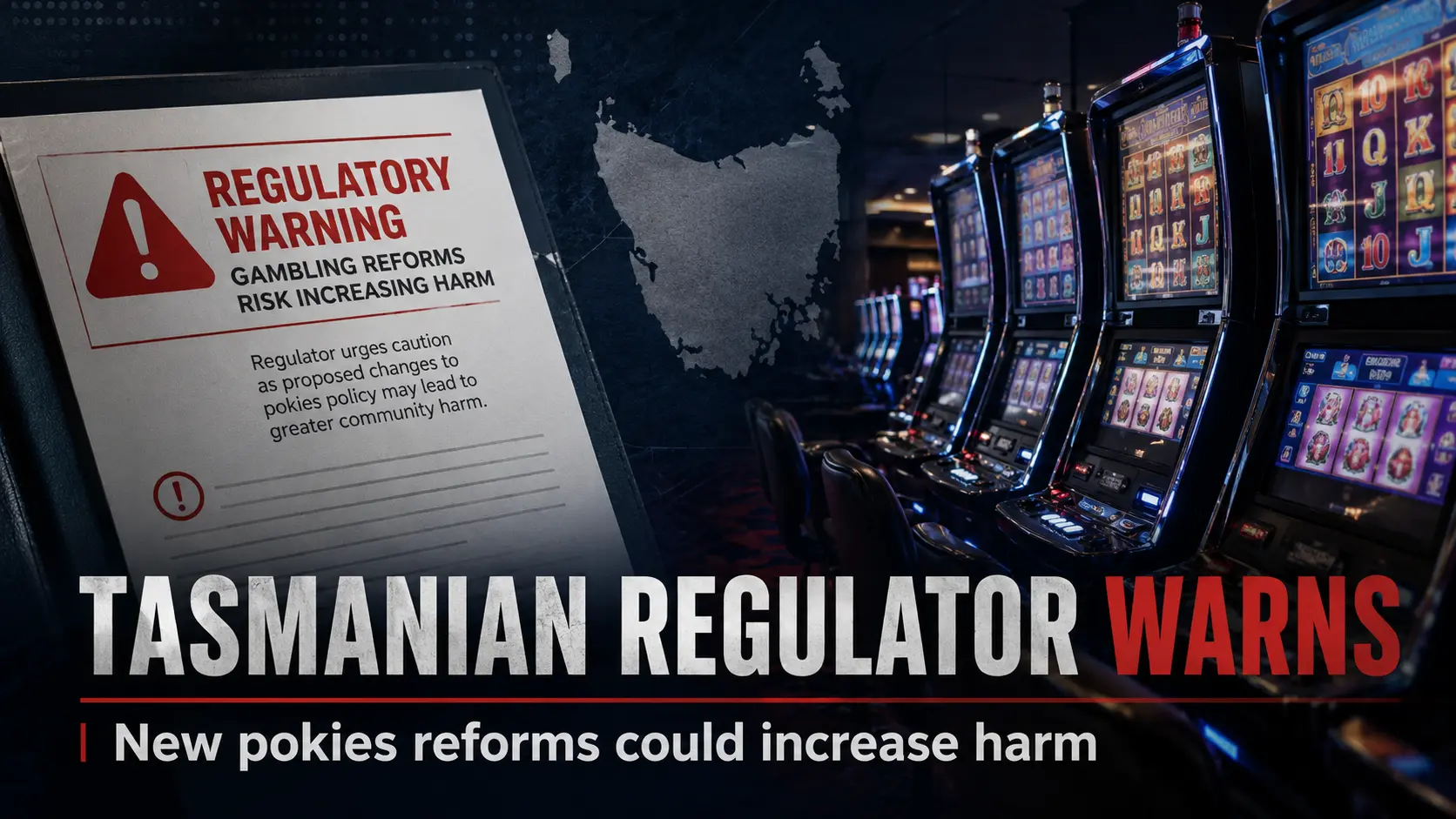
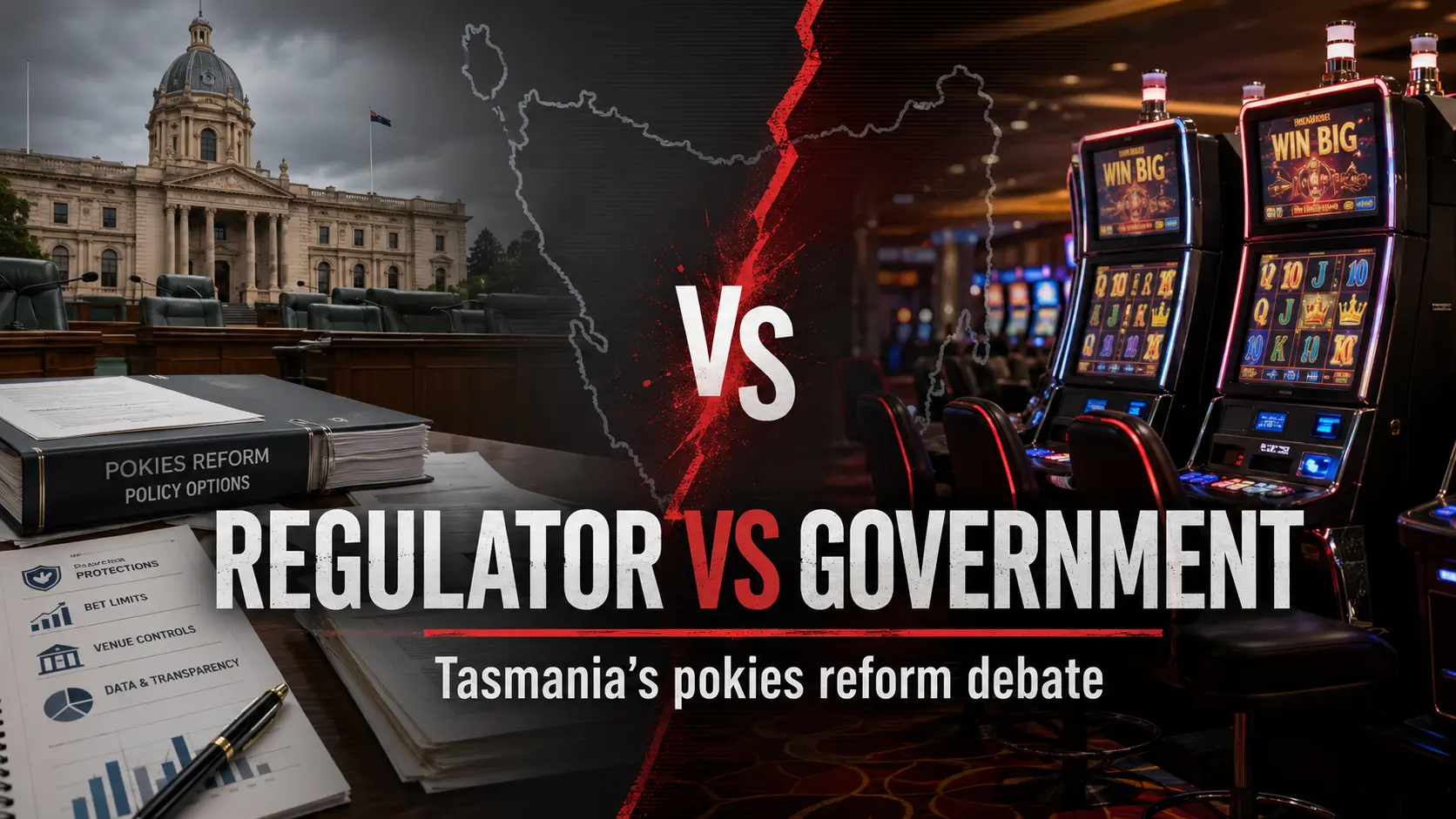
Tasmania’s proposed poker machine reforms, presented by the government as a new strategy for reducing gambling-related harm, have come under serious criticism from the independent regulator responsible for overseeing the measures.
Documents released under right-to-information legislation show that the Tasmanian Liquor and Gaming Commission was not involved in developing the reform package and was not asked to provide formal advice before the measures were publicly announced.
According to the released correspondence, the Commission’s chair was informed about the reforms on January 23, 2026—the same day the package was presented publicly by Treasurer Eric Abetz.
The disclosure has raised questions about why Tasmania’s primary gambling regulator was excluded from the development of policies directly affecting player protection, anti-money laundering controls and the operation of poker machines across the state.
Commission Says the Reforms Lack Supporting Evidence
In a letter sent to the Treasurer on March 31, all three members of the Commission said they had not seen sufficient evidence showing that the proposed initiatives would reduce gambling-related harm.
The regulator warned that some elements of the package could have the opposite effect by weakening existing protections and making it easier for players to access additional money while gambling.
The criticism is particularly significant because the Commission’s responsibilities include reducing gambling harm, protecting vulnerable consumers and preventing criminal influence within Tasmania’s gambling industry.
The same regulator is also expected to implement key parts of the government’s reform package by the middle of 2028.
Return of ATMs Could Make It Easier to Chase Losses
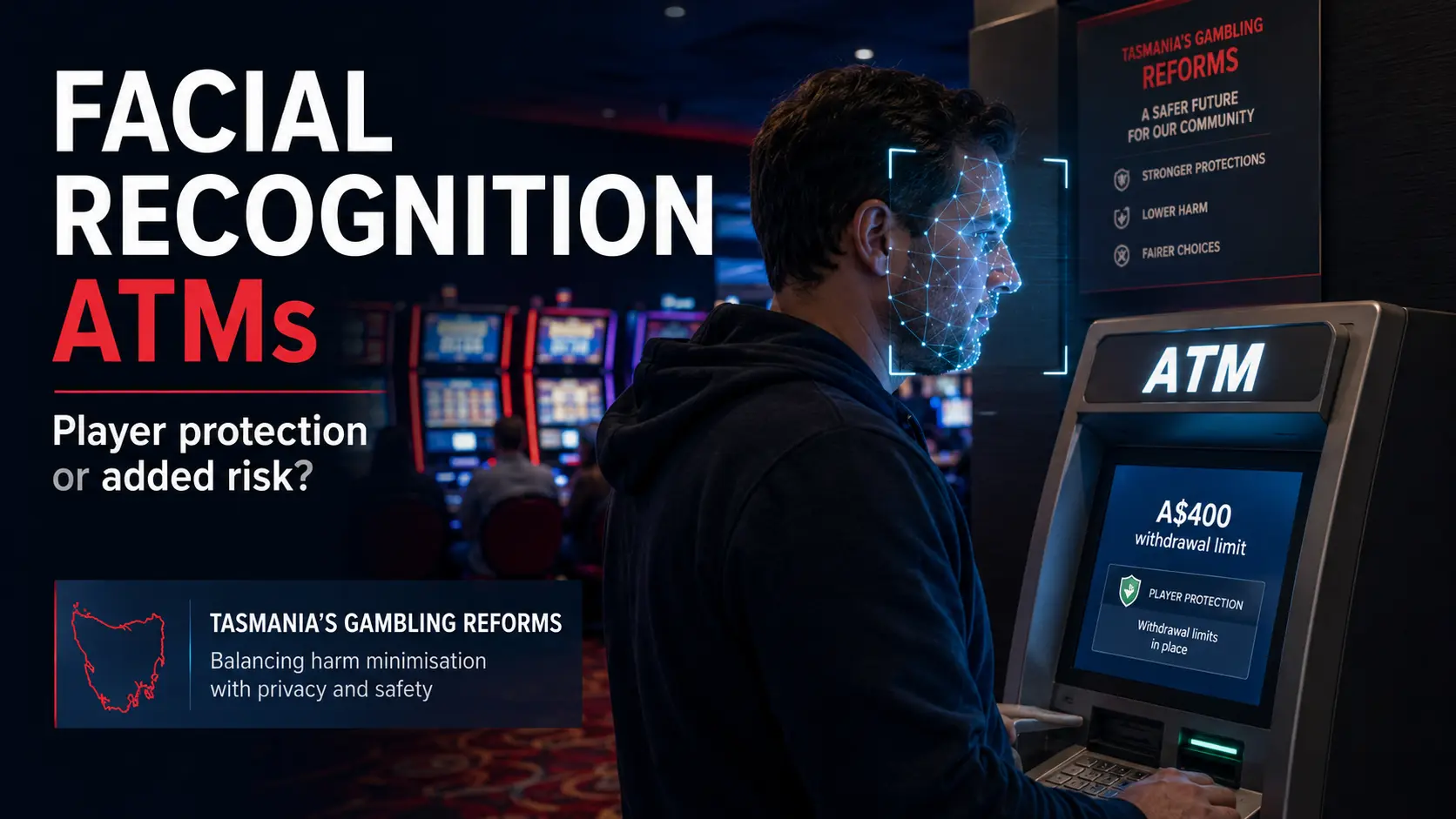
One of the most controversial proposals is the return of ATMs to hotels and clubs containing poker machines.
Under the government’s plan, the machines would use facial-recognition technology and impose a withdrawal limit of A$400 during a 24-hour period.
Current rules allow players to withdraw a maximum of A$200 through a single EFTPOS transaction each day. If both payment methods remain available, the Commission believes players could potentially access as much as A$600 while inside a gambling venue.
That would give players access to three times the amount currently available through venue-based withdrawals.
The regulator warned that easier access to additional cash could encourage players to continue gambling after losing their original budget. This behaviour, commonly described as chasing losses, is strongly associated with more serious gambling problems.
The Commission also said it had not identified sufficient evidence showing that facial-recognition ATMs were already operating as an effective player-protection measure elsewhere in Australia.
TITO System Provides Speed but No Overall Spending Limit
The reforms also include the mandatory introduction of ticket-in, ticket-out technology, commonly known as TITO.
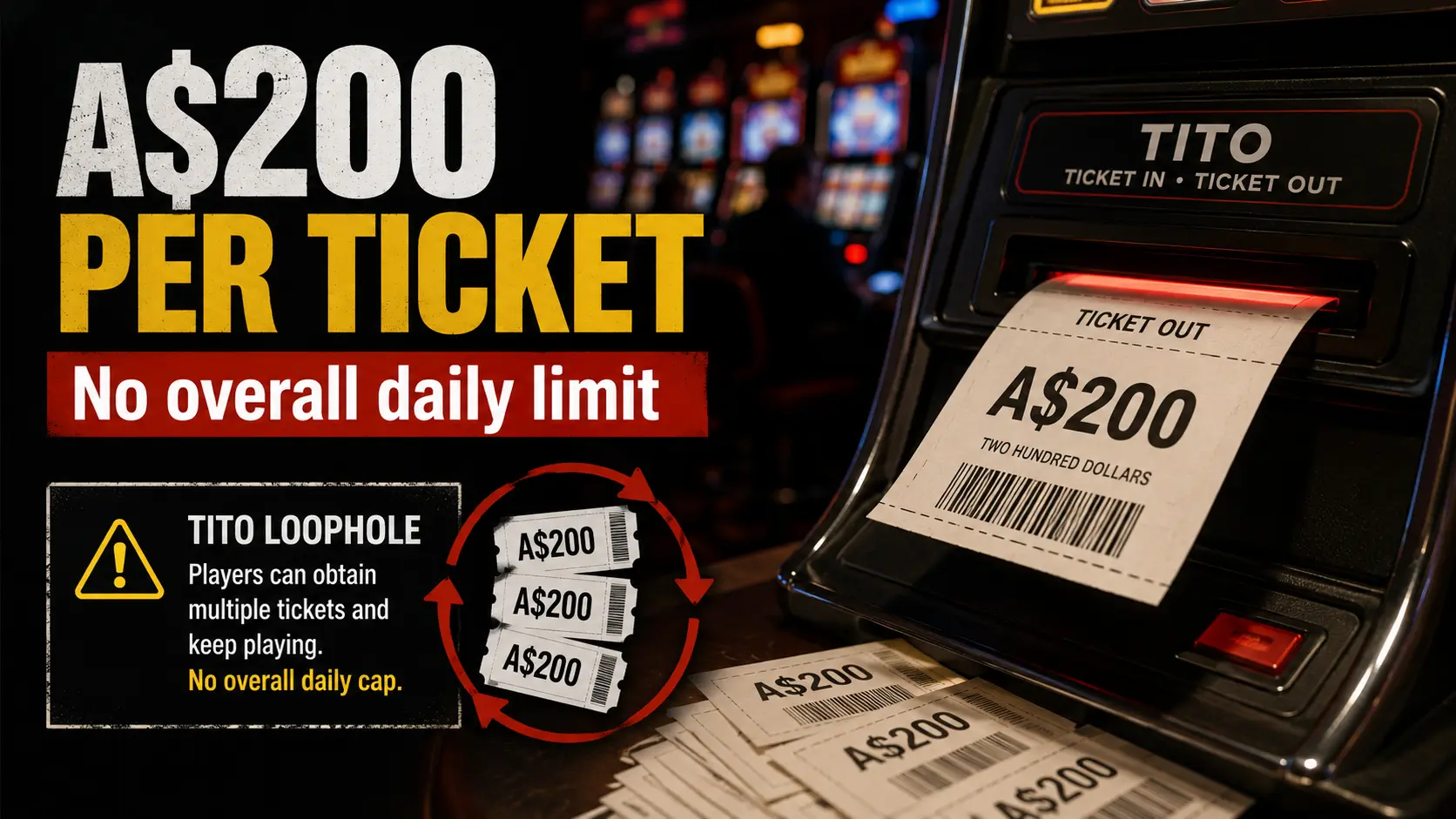
Under this system, players convert money into electronic or printed tickets that can be inserted directly into poker machines. The maximum value of an individual ticket was increased from an initially proposed A$100 to A$200.
However, there would be no limit on the number of tickets a player could purchase.
The tickets would also not be connected to mandatory player registration, a pre-committed gambling budget or a daily loss limit. As a result, the A$200 restriction would limit only the value of each ticket rather than the total amount a person could spend.
The Commission warned that TITO could make it faster and easier to transfer money into poker machines. It could also remove some of the practical and psychological interruptions that occur when players use coins or repeatedly handle cash.
According to research referenced in the regulator’s correspondence, TITO and similar cashless systems may, under certain circumstances, increase player spending.
Anti-Money Laundering Risks Become Part of the Debate
The regulator also raised concerns about possible money-laundering risks.
A combination of ATMs inside gambling venues, increased access to cash and transferable TITO tickets could create additional opportunities to move money of unknown origin through poker machines.
A person could theoretically insert cash into a machine, conduct limited gambling activity and then redeem the remaining balance as what appears to be legitimate gambling proceeds.
TITO tickets could also potentially be transferred or sold between individuals. Someone holding money of suspicious origin could purchase a ticket from another player and later redeem it as apparently legitimate funds.
Limiting each ticket to A$200 may not fully address the risk when there is no restriction on the number of tickets one person can obtain.
Australia’s financial intelligence agency, AUSTRAC, has previously identified electronic gaming machines as a higher-risk gambling service because of the amount of cash that can pass through them.
The Tasmanian regulator also questioned whether hotels and clubs currently have anti-money laundering systems, employee training and risk-assessment procedures comparable to those used by major casinos.
Facial Recognition Protects Only a Limited Group of Players
Mandatory facial-recognition technology is one of the government’s main arguments in support of the new package.
The technology is intended to identify people who have voluntarily excluded themselves from gambling or who have been prohibited from entering gaming areas under the Tasmanian Gambling Exclusion Scheme.
The Commission acknowledged that facial recognition could help venues enforce existing exclusion orders.
However, the system would protect only players who are already registered in an exclusion programme. It would not impose spending or loss limits on the broader population of poker machine users.
It would therefore do little to protect someone who is experiencing serious gambling problems but has not yet entered the self-exclusion system.
Its effectiveness would also depend on venue employees responding quickly and correctly whenever the technology identifies an excluded person.
Longer Venue Closures May Have a Limited Impact
The government has proposed increasing the mandatory closure period for gaming areas from four to seven hours each day.
The Commission accepted that shorter operating hours could help some high-risk players. However, it noted that many venues already do not operate poker machines for the full 20 hours currently permitted.
The regulator called for standardised closure periods across all venues.
Without consistent operating hours, a player could simply move from one hotel or club to another after the first venue closes. The Commission said there was already evidence that some excluded or high-risk players moved between venues during the early hours of the morning.
Tasmania Abandoned Mandatory Player Cards and Binding Loss Limits
The most important difference between the new package and Tasmania’s earlier reform proposal is the removal of a universal player card with mandatory pre-set limits.
The original system would have required every poker machine player to register before gambling.
Default limits were expected to restrict losses to A$100 per day, A$500 per month and A$5,000 per year. Players seeking higher limits would have been required to demonstrate that they could financially afford the increased level of gambling expenditure.
Supporters argued that the system would create clear and measurable restrictions before losses occurred, rather than relying on intervention after a player had already developed serious problems.
The government later abandoned the mandatory card proposal following strong opposition from hospitality and gambling industry representatives.
An economic analysis commissioned by the government found that the universal card could reduce revenue for gambling venues and the hospitality industry. However, it also suggested that the wider economic impact could be positive because households would retain more disposable income and the state could face lower health, social welfare and justice-related costs.
The same analysis reportedly warned that cashless gambling systems without registration and mandatory limits could make it easier for players to spend more.
Government Defends the Package as a Practical Alternative
Treasurer Eric Abetz has defended the reform package and argued that the measures should not be assessed individually.
The government says that controlled ATMs, TITO technology, facial recognition, longer closure periods, improved self-exclusion measures and a reduction in the overall number of poker machines should be considered as one combined system.
Abetz has described the package as a proportionate and practical approach that attempts to reduce gambling harm while preserving individual responsibility.
Hospitality industry representatives have supported the new direction, while the previous universal player-card proposal faced opposition from both the industry and sections of Tasmania’s political establishment.
Was the Reform Package Weakened Under Industry Pressure?
Independent MP Meg Webb and members of the Tasmanian Greens have argued that the government weakened its poker machine reforms following pressure from the hospitality and gambling industries.
Hospitality Tasmania had openly opposed the mandatory player card, warning that it would reduce venue revenue and negatively affect hotels and clubs.
Political donations connected to the hospitality sector have added another layer to the debate. However, donations alone do not prove that a particular government decision was purchased or directly influenced.
The central question is why Tasmania replaced a system based on universal registration and measurable loss limits with a package that its own regulator says is not sufficiently supported by evidence.
Tasmania had previously been positioned to become the first Australian jurisdiction to introduce a mandatory pre-commitment system for poker machine gambling.
Following the change in policy, the state could instead become a testing ground for a combination of TITO technology, facial recognition and easier access to cash—the same measures that Tasmania’s independent gambling regulator has warned could increase gambling harm and create additional anti-money laundering risks.