Follow responsible gambling news, safer-play rules, self-exclusion, player limits, advertising controls and gambling-harm prevention worldwide.
Safer gambling hub
Follow the rules, tools and evidence shaping safer gambling
CasinoWire tracks responsible gambling news across online betting, casinos and land-based venues, with a focus on measures that can change player outcomes: account limits, self-exclusion, safer advertising, risk monitoring, affordability processes and access to support. The page combines current enforcement and policy reporting with practical background for readers who need to understand how a safeguard works in real life.
Responsible gambling is not a single warning message. It is a system involving regulators, operators, public-health bodies, researchers, financial institutions and support services. New stories are added as rules change, evidence develops and authorities test whether businesses are meeting their social-responsibility duties.
Player protection is measured by what happens at the account level
A policy becomes meaningful when it changes a real customer journey. Deposit controls, credit-card restrictions, exclusion checks and limits on promotional contact can reduce exposure or add friction at moments of risk. Enforcement stories are especially useful because they show where a control failed, which party was responsible and what regulators expect operators to improve.
Recent reporting from Colorado, Massachusetts and Singapore illustrates three different points in that chain. Funding rules affect how money enters an account; advertising rules govern who can be targeted; and exclusion checks determine whether a person who has asked to stop can continue gambling. Reading these measures together gives a clearer picture than treating each announcement as an isolated compliance event.
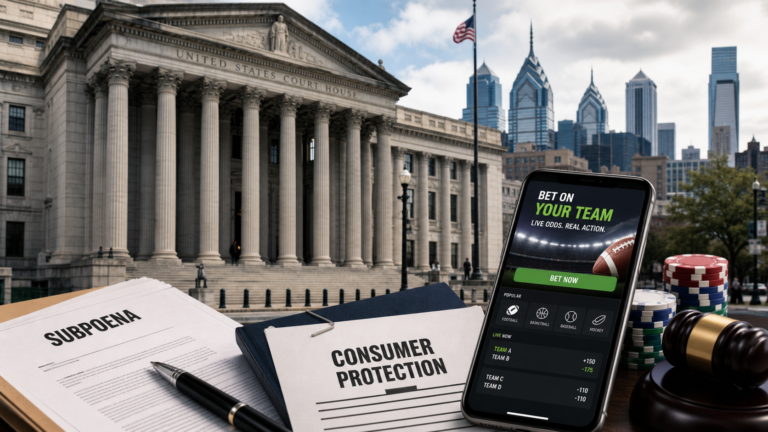
DraftKings has sued Philadelphia to block a local consumer protection probe into sportsbook promotions, bonuses, VIP programs and responsible gambling controls.
Limits work best before gambling stops feeling like entertainment
Responsible play starts with decisions made before a session: setting an affordable entertainment budget, checking the smallest practical stake and understanding how long the chosen game can run. RTP and house edge describe long-run game mathematics, not what an individual session will return. Volatility describes the pattern of outcomes, not whether a game is safe or likely to pay next.
Tools such as deposit limits, loss limits, time reminders and self-exclusion serve different purposes. A limit can create a boundary, while self-exclusion is intended for a stronger break from gambling access. None of these tools should be presented as a cure for gambling disorder. When control is difficult or gambling is causing financial, emotional or relationship harm, specialist support is more appropriate than another budgeting technique.
The UKGC says standalone risk-algorithm research was paused after its earlier data study while work moved to customer interaction and financial-risk controls.
Brazil's Sigap system now blocks or closes licensed betting accounts for beneficiaries of major social and financial-support programmes through CPF checks.
What responsible gambling coverage should help readers understand
Safer-gambling reporting needs to distinguish prevention, detection and intervention. Prevention includes product rules, age controls and advertising standards. Detection may involve account data, changes in deposit behaviour or other indicators of risk. Intervention ranges from targeted messages and cooling-off periods to account restrictions or exclusion. The proportional response depends on the jurisdiction and evidence available.
It also matters who produced the evidence. A regulator, peer-reviewed study, operator trial and campaign survey can each be useful, but they answer different questions. CasinoWire identifies the source and avoids treating a company initiative as proof of effectiveness. Where rules differ between markets, coverage explains the relevant jurisdiction rather than implying that one requirement applies everywhere.
For immediate personal help, readers should use qualified services in their own country or jurisdiction. This news hub is educational and editorial; it is not clinical, legal or financial advice.
What to watch
Key developments CasinoWire is tracking
Financial safeguards
Credit-card rules, deposit controls, affordability processes and the role of banks and payment providers.
Marketing standards
Restrictions involving young people, vulnerable audiences, inducements, VIP activity and direct messaging.
Exclusion and access
Whether self-exclusion databases, venue checks and multi-operator systems work as intended.
Evidence and treatment
New research, public-health policy, support capacity and evaluation of harm-prevention programs.
Reader questions
Responsible Gambling News & Player Protection FAQ
What is responsible gambling?
Responsible gambling describes policies, tools and behaviours intended to reduce gambling-related harm and keep gambling within affordable entertainment limits. It includes operator duties, regulatory standards, product design, player controls, education, intervention and access to support.
What is the difference between a limit and self-exclusion?
A limit restricts a measure such as deposits, losses or session time. Self-exclusion is a stronger step that blocks gambling access for a selected period or under a multi-operator scheme. The exact scope, duration and reversal rules depend on the service and jurisdiction.
Can RTP or house edge predict a session result?
No. RTP and house edge are long-run mathematical measures. Short sessions can vary widely, and neither figure guarantees a return. They are useful for comparing game structure, not for chasing losses or forecasting the next outcome.
Where should someone seek help for gambling harm?
Use a qualified gambling-support or health service in the person's country, and seek urgent local help if there is immediate danger. Operator tools can support a break, but they do not replace professional care when gambling is causing serious harm.
Related coverage
Explore connected CasinoWire topics
Tag guide
What responsible gambling means
Responsible gambling covers the tools, rules and habits intended to reduce gambling-related harm. Examples include deposit limits, time-outs, self-exclusion, age checks, clear game information and operator monitoring for signs of risky play.
These measures cannot make gambling risk-free or guarantee that a player will stay in control. The articles below explain individual protections and industry decisions in straightforward language, with links to the complete reporting.
The UKGC says standalone risk-algorithm research was paused after its earlier data study while work moved to customer interaction and financial-risk controls.
Brazil's Sigap system now blocks or closes licensed betting accounts for beneficiaries of major social and financial-support programmes through CPF checks.
Tasmania is assessing venue licence applications for 35 gaming machines and Keno after objections closed July 31, moving both proposals into regulatory review.
DraftKings has sued Philadelphia to block a local consumer protection probe into sportsbook promotions, bonuses, VIP programs and responsible gambling controls.
Alberta launched a regulated online casino and sports betting market on July 13, 2026, with 22 registered sites, AGLC oversight and new player-protection rules.
The UKGC says standalone risk-algorithm research was paused after its earlier data study while work moved to customer interaction and financial-risk controls.
Brazil’s Sigap system now blocks or closes licensed betting accounts for beneficiaries of major social and financial-support programmes through CPF checks.
Tasmania is assessing venue licence applications for 35 gaming machines and Keno after objections closed July 31, moving both proposals into regulatory review.