
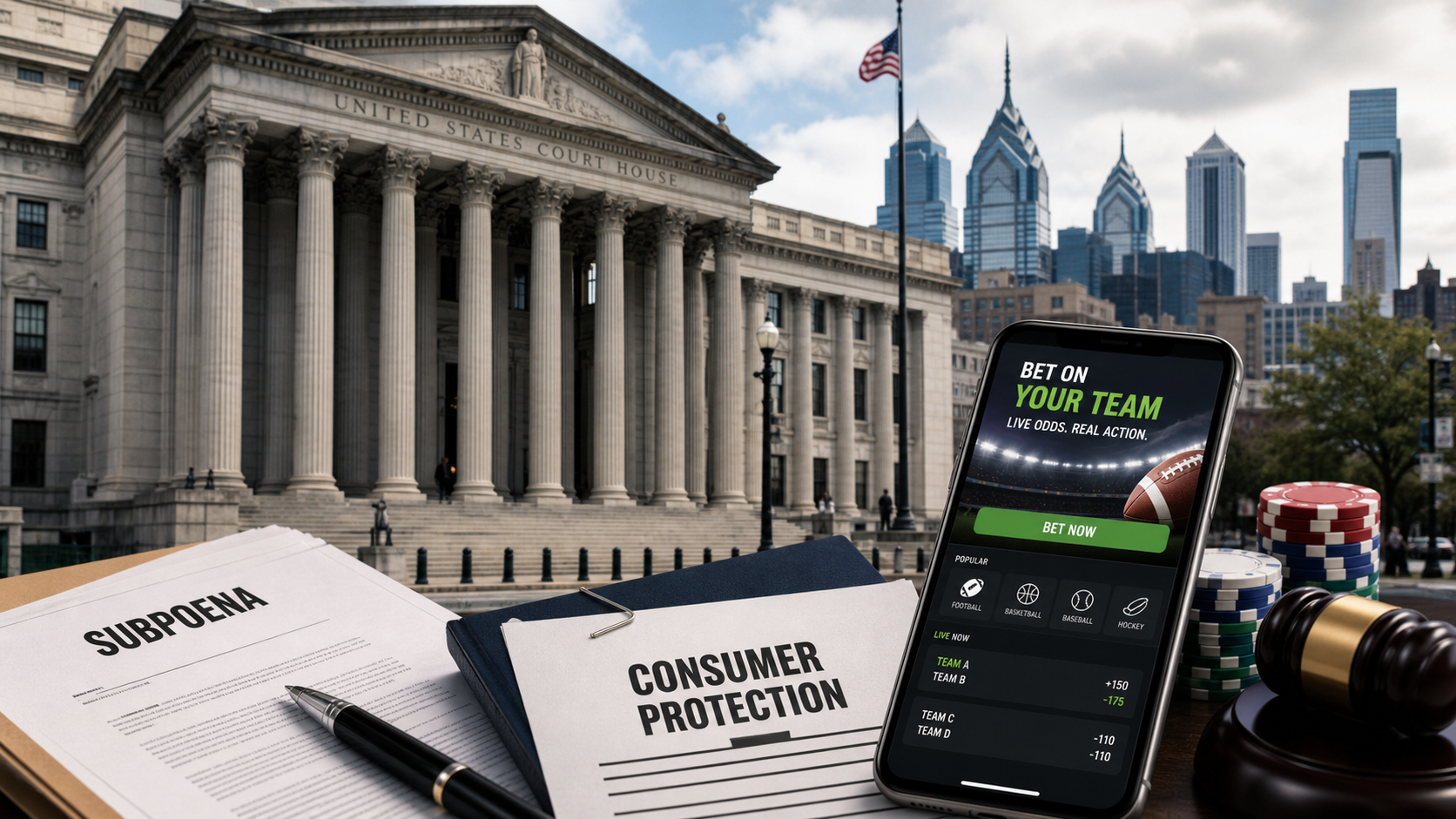
DraftKings has taken Philadelphia to federal court in an effort to stop the city from pursuing a local consumer protection investigation into its sports betting business. The dispute centers on a city subpoena seeking documents about sportsbook promotions, promotional credits, bonuses, VIP programs and measures designed to identify or reduce problem gambling risk.
The company argues that those areas are already governed by Pennsylvania gambling law and supervised by the state regulator, leaving Philadelphia without room to run a separate local enforcement track. The case is therefore bigger than one subpoena: it tests how much power a city can claim over a licensed betting operator when a statewide gaming framework is already in place.
Source: Reuters, published July 16, 2026.
The Core Legal Fight
DraftKings is asking the federal court to block Philadelphia from enforcing its local consumer protection ordinance against the company in this context. Its central position is preemption: sports wagering, promotional practices and operator safeguards are already regulated at the state level in Pennsylvania.
That argument matters because gambling is usually licensed and monitored through state gaming agencies, not city consumer offices. If DraftKings succeeds, the ruling could limit how aggressively local governments can use broad consumer protection laws to investigate state-licensed sportsbook activity.
Philadelphia's Consumer Protection Angle
From the city's side, the subpoena suggests concern about how betting products are marketed and managed inside the local market. Promotional credits, bonus terms and VIP treatment can shape player behavior, especially when offers are tied to continued wagering or high-value customer programs.
Local officials may view consumer protection as a separate question from licensing: even if an operator is licensed statewide, a city may still want to know whether residents are receiving clear bonus terms, fair advertising and adequate responsible gambling safeguards. That is the tension the court now has to untangle.

Why Promotions and VIP Programs Are Under Scrutiny
Sportsbook promotions can look simple on the surface, but the details often matter. A bonus may involve play-through rules, time limits, eligible bets, minimum odds or withdrawal restrictions. If those conditions are not made clear, the same offer can be seen by regulators as a marketing tool and by consumers as a source of confusion.
VIP programs raise a different issue. They can reward loyal or high-spending customers with personalized service, offers or access. The regulatory question is whether those programs also include enough guardrails when a player's activity shows signs of harm. That is why the subpoena's focus on both bonuses and responsible gambling controls is significant.
What It Means for Operators
For licensed operators, the lawsuit is about regulatory certainty. Companies prefer one clear rulebook, especially in states where gaming agencies already approve licenses, monitor compliance and can discipline operators. Multiple local investigations could create overlapping obligations and inconsistent standards.
But the case also sends a practical warning: promotional language, VIP segmentation and safer gambling records are becoming legal risk areas. Even when a company believes state law is on its side, the documents behind marketing decisions may still become the focus of regulators or consumer protection offices.
What It Means for Players
For adult players, the immediate effect is limited; the lawsuit does not change whether DraftKings can operate in Pennsylvania. The broader player-facing issue is transparency. If courts allow local consumer protection probes, players may see more scrutiny of bonus terms, VIP practices and intervention systems.
If DraftKings wins on preemption, oversight would remain primarily with Pennsylvania's gaming regulator. That does not remove consumer protection from the equation, but it would reinforce the idea that licensed betting conduct should be handled through the state gambling framework rather than city-by-city enforcement.
The Bigger Regulatory Question
The case sits inside a wider US debate over who should police online betting conduct. States legalized sports betting through licensing systems, but cities and consumer agencies are increasingly interested in advertising, inducements and the treatment of vulnerable customers.
A narrow ruling could simply decide whether Philadelphia's subpoena goes too far. A broader ruling could influence how other municipalities approach sportsbook promotions and responsible gambling investigations in states where operators are already licensed.
Bottom Line
DraftKings is framing Philadelphia's investigation as an overreach into a field already occupied by Pennsylvania law. Philadelphia's apparent concern is that local consumer protection tools should still apply when betting promotions, bonuses and VIP programs affect residents.
That makes the lawsuit an important test for the next phase of US sports betting regulation: not just whether operators are licensed, but which level of government gets to examine how they market, reward and protect their customers.