
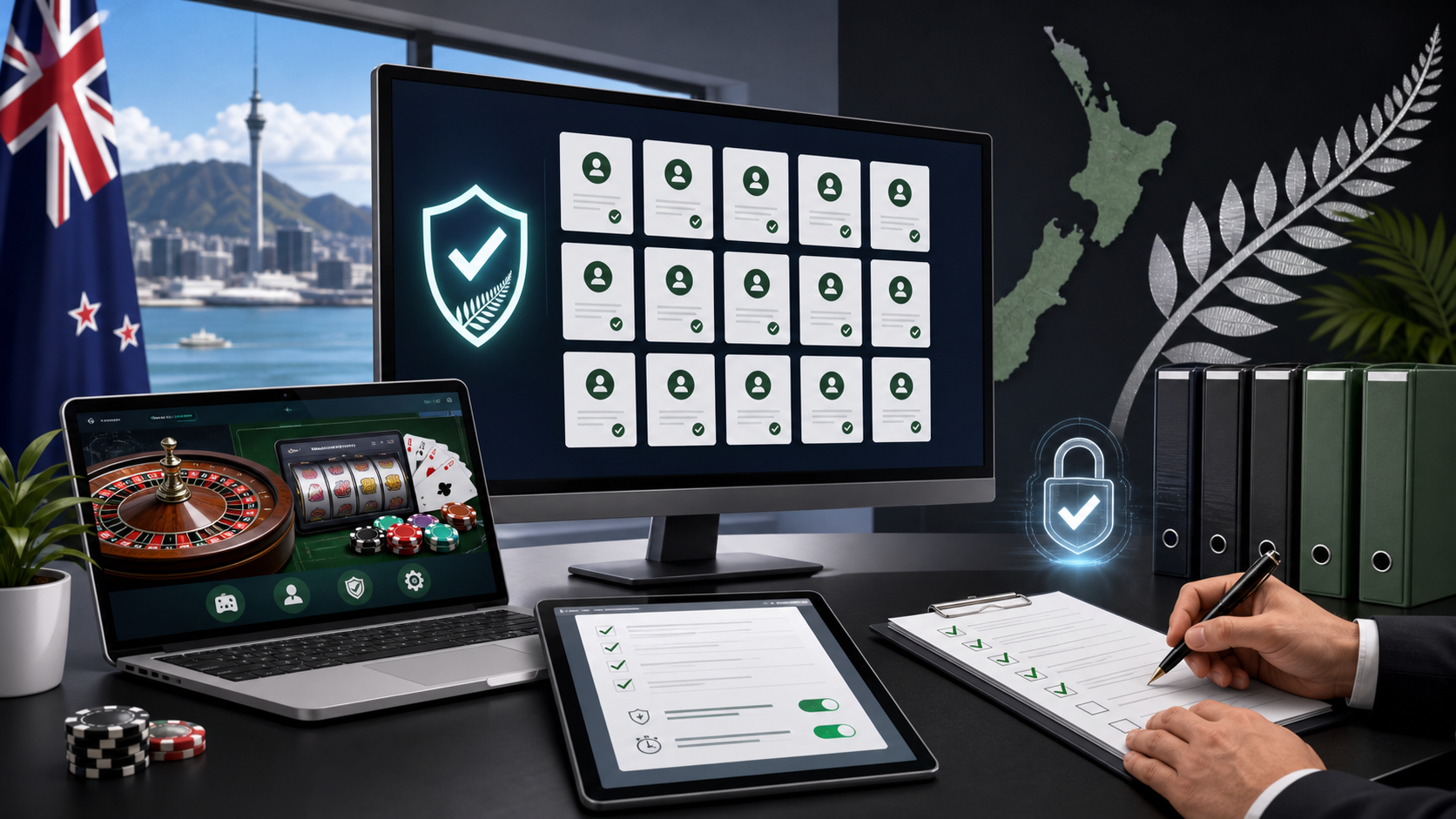
New Zealand has opened the expression-of-interest phase for its new regulated online casino regime, with up to 15 licences available to operators. Applicants must provide details on ownership, platforms, existing licences, source of funds and previous regulatory investigations.
Under the published requirements, the application fee is NZD 19,000, while the minimum capital requirement is NZD 7.5 million. That moves the country from the legislative stage into the practical selection of its first licensed online casino operators.
From Lawmaking to Operator Selection
Until now, the central question was how New Zealand would regulate online casinos. Now the question is who gets into the first licensed group and on what terms. A cap of 15 licences means the market will not be fully open. It will be selective and controlled.
Each licence covers one brand, and the regulatory process is designed to test ownership, financial stability and the applicant's compliance history.
What the Financial Thresholds Mean
The NZD 19,000 fee filters for serious applications, but the NZD 7.5 million capital requirement is the stronger signal. It suggests the regulator does not want thin shell structures without the financial capacity for compliance, player protection, payouts and operational stability.
For international iGaming groups, the threshold may be manageable if they already have mature platforms. For smaller local participants, however, it may become a barrier or a reason to partner with larger technology and casino operators.
Key New Zealand Licensing Thresholds
online casino licences
application fee
minimum capital
per licence
Player Protection Will Be the Central Test
The new regulated system will not be judged only by licence numbers. The crucial test will be how operators handle age verification, anti-money laundering checks, limits, self-exclusion, advertising and responsible gambling rules.
If the licensed model can move users from offshore or grey-market sites into a regulated channel, the state gains better control, a tax base and clearer player-protection mechanisms. If the conditions are too slow or too expensive, some demand may remain outside the domestic regime.
Bottom Line
The opening of applications for up to 15 online casino licences is one of the region's most important iGaming regulatory changes. New Zealand is building a market that will be limited by operator count but closely checked for capital, ownership and compliance history.
For operators, this is a route into a new regulated market. For the regulator, it is a test of whether a selective model can deliver competition, control and protection for adult players at the same time.
21+ notice: This content is intended for adult audiences. Betting and casino games carry financial risk and should not be treated as a way to make money.