
TransAct Technologies’ preliminary second-quarter 2026 results put its casino and gaming division at the center of a broader strategic review. The company reported $7.3 million in quarterly casino and gaming sales and appointed BofA Securities as financial adviser to examine potential alternatives for the business.
Reported casino and gaming sales were 4% below the $7.6 million recorded a year earlier, but the comparison included a $1.0 million reduction tied to customer tariff-surcharge refunds. Excluding that item, TransAct said segment sales would have been $8.3 million, approximately 9% higher year over year.
The distinction between reported and adjusted comparisons is essential. The $7.3 million figure is the preliminary reported result. The $8.3 million figure is management’s view of sales excluding the refund item and should be read as a supplemental measure rather than a replacement for the reported number.
Casino and Gaming Remains a Major Revenue Contributor
TransAct reported company-wide net sales of $13.9 million for the quarter, up 1% from $13.8 million in Q2 2025. Casino and gaming therefore represented slightly more than half of reported quarterly sales.
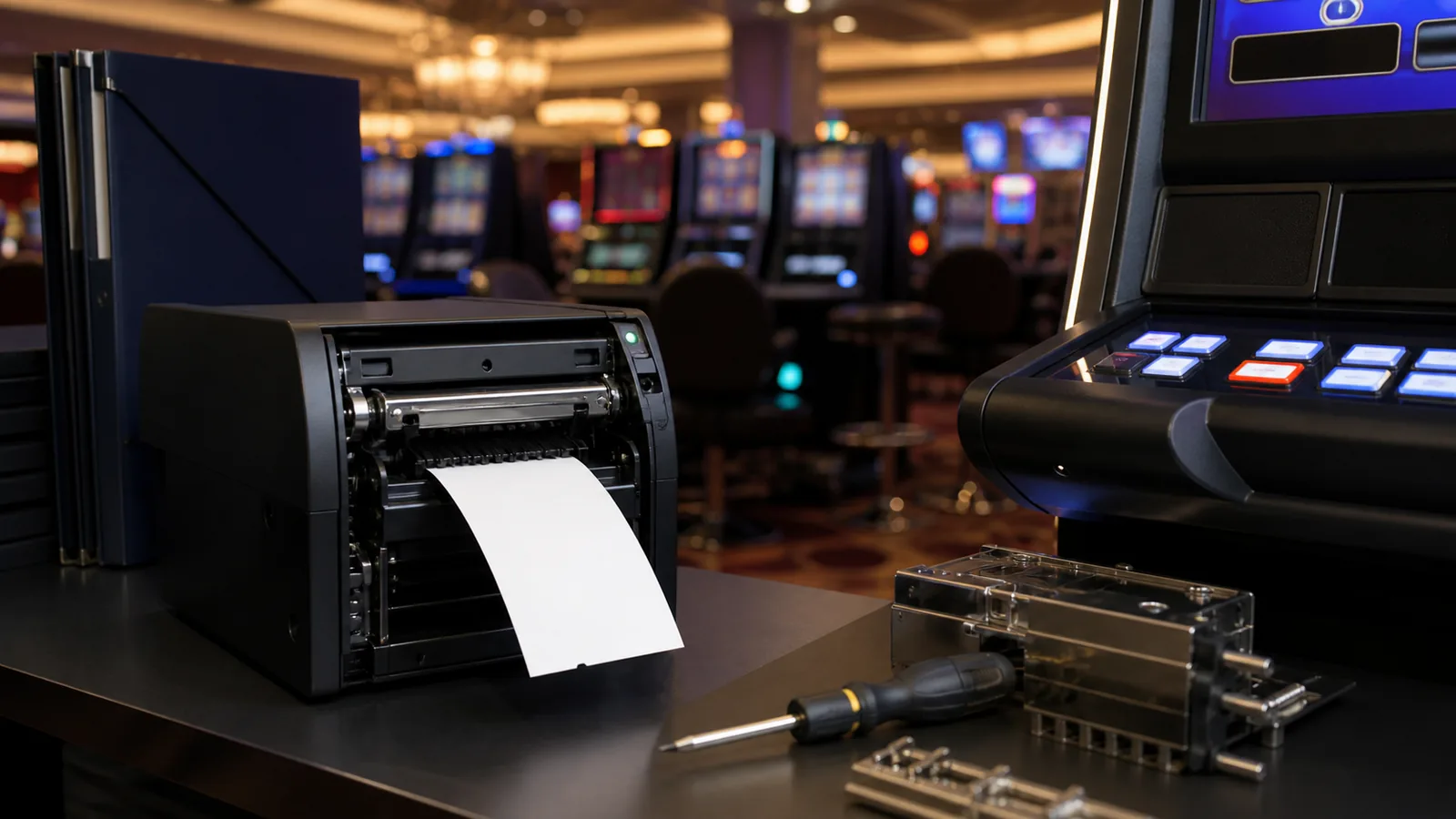
The segment includes TransAct’s EPIC technology, used for ticket-in/ticket-out functionality and promotional capabilities on gaming floors. TITO printers and related systems allow a machine to issue a redeemable ticket instead of relying entirely on coins or manual cash handling, making print reliability a core part of casino operations.
Chief Executive John Dillon described casino and gaming as having another strong quarter and said the market continues to generate substantial cash flow and positive results. Management’s decision to engage an adviser with casino and gaming expertise indicates that the division is being reviewed from a position the company characterizes as strength.
A strategic review does not guarantee a sale, separation, partnership or other transaction. TransAct said no timetable has been set and there can be no assurance that the process will lead to a specific outcome. That caution should remain central to coverage until the board approves and announces a course of action.
Tariff Refunds Complicate the Headline Comparison
The $1.0 million reduction related to customer tariff-surcharge refunds materially changed the segment’s year-over-year presentation. On the reported basis, casino and gaming sales declined 4%. Excluding the item, management calculated growth of approximately 9%.
Investors should keep both figures visible because they answer different questions. The reported result shows what the preliminary financial statements recognized. The adjusted view attempts to show demand without an item management believes is not reflective of ongoing operations.
The refund also reduced net income, EBITDA and adjusted EBITDA by $0.4 million, according to the company. TransAct reported a quarterly net loss of $50,000, EBITDA of $59,000 and adjusted EBITDA of $514,000. The latter two measures are non-GAAP and should be considered alongside the GAAP result.
Company-wide gross profit rose to $7.0 million from $6.7 million, while gross margin increased to 50.2% from 48.2%. TransAct recorded an operating loss of $54,000, compared with an operating loss of $258,000 in the prior-year quarter.
BofA Securities Will Advise the Strategic Review
TransAct’s board initiated a formal review focused on the casino and gaming business and engaged BofA Securities as financial adviser. Management cited the adviser’s experience in the casino and gaming marketplace and its existing relationship with TransAct.
The board may consider a broader range of alternatives if it believes that doing so could enhance shareholder value. The wording leaves multiple outcomes open. A transaction involving only the casino division is possible, but the company has not limited the review to a particular structure.
For casino customers, continuity is the immediate operational issue. Gaming-floor technology is integrated into ticket redemption, accounting and player workflows. Any ownership or strategic change would need to preserve product support, consumables supply, certification status and service commitments.
For a potential buyer or partner, the attraction would include an installed customer base, specialized intellectual property and a recurring need for consumables and service. The challenge is that casino technology is a regulated, reliability-sensitive market with long product cycles and customer-specific integrations.
Gaming-Floor Demand Extends Beyond Printer Shipments
A casino technology supplier’s performance cannot be judged only by quarterly hardware units. New openings, floor expansions, replacement cycles and upgrades can create uneven order patterns. Consumables, maintenance and promotional printing can provide additional revenue after the initial equipment placement.
TITO remains important because it links machine play with the cage, kiosks and accounting systems. Printer failure can interrupt play and increase staff intervention. Casinos therefore evaluate not only purchase price but also reliability, serviceability, compatibility and supply continuity.
Promotional functionality adds another layer. Printed offers and bonuses can support player engagement, but operators must configure them within internal controls and applicable marketing rules. A supplier able to combine reliable transaction printing with promotional capabilities may hold more strategic value than a commodity hardware vendor.
TransAct’s results suggest that the casino business remains large enough to influence the company’s overall profile. The strategic review now asks whether that value is best realized inside the current group, through a transaction or through another structure that has not yet been disclosed.
FST Growth Shapes the Strategic Context
TransAct is also building its food-service technology (FST) business around BOHA! software and integrated hardware. FST recurring revenue rose 13% to $3.4 million, including software revenue of $732,000, up 47% year over year.
Active online BOHA! units increased 33% to 21,790 at June 30. The company said monetizing that installed base through software, labels and other recurring sources is a key management focus.
The contrast helps explain the review. FST is being positioned as a higher-margin, software-led recurring-revenue operation, while casino and gaming generates substantial cash flow through a specialized hardware and consumables ecosystem. Both businesses may be valuable, but they have different growth profiles and investor narratives.
TransAct reiterated full-year net-sales guidance of $55 million to $57 million and raised adjusted EBITDA guidance to between $1.5 million and $2.0 million. The adjusted EBITDA outlook is non-GAAP and the company noted that a full reconciliation cannot be provided without unreasonable effort because future adjustments are uncertain.
What the Casino Industry Should Watch
The next important development is not another rumor about a potential buyer. It is a formal board-approved outcome, if one emerges. Until then, TransAct continues to operate the business and has not announced a change to customer support or product availability.
Casino operators should watch service levels, consumables supply, product road maps and any change in account management. Investors should monitor the reported segment performance separately from management’s adjusted comparison and assess how a possible transaction would affect corporate overhead, cash generation and FST investment.
CasinoWire’s casino technology coverage follows suppliers whose systems support gaming-floor operations. TransAct’s Q2 update is significant because the division is both an operating contributor and the subject of a strategic value review.
Bottom Line
TransAct reported preliminary Q2 casino and gaming sales of $7.3 million, down 4% year over year. Excluding $1.0 million in tariff-surcharge refunds, management said the segment would have generated $8.3 million, up approximately 9%.
The company has engaged BofA Securities to review strategic alternatives for casino and gaming, but no outcome or timetable is guaranteed. The result places TITO and gaming-floor technology demand in focus while raising a larger question: whether TransAct’s casino business will create more value inside the group or through a future strategic transaction.
Primary source: TransAct Technologies Form 8-K and Exhibit 99.1, filed August 11, 2026.