
California tribal gaming leaders are increasingly pointing to 2028 as the next realistic opportunity to bring online sports betting before state voters.
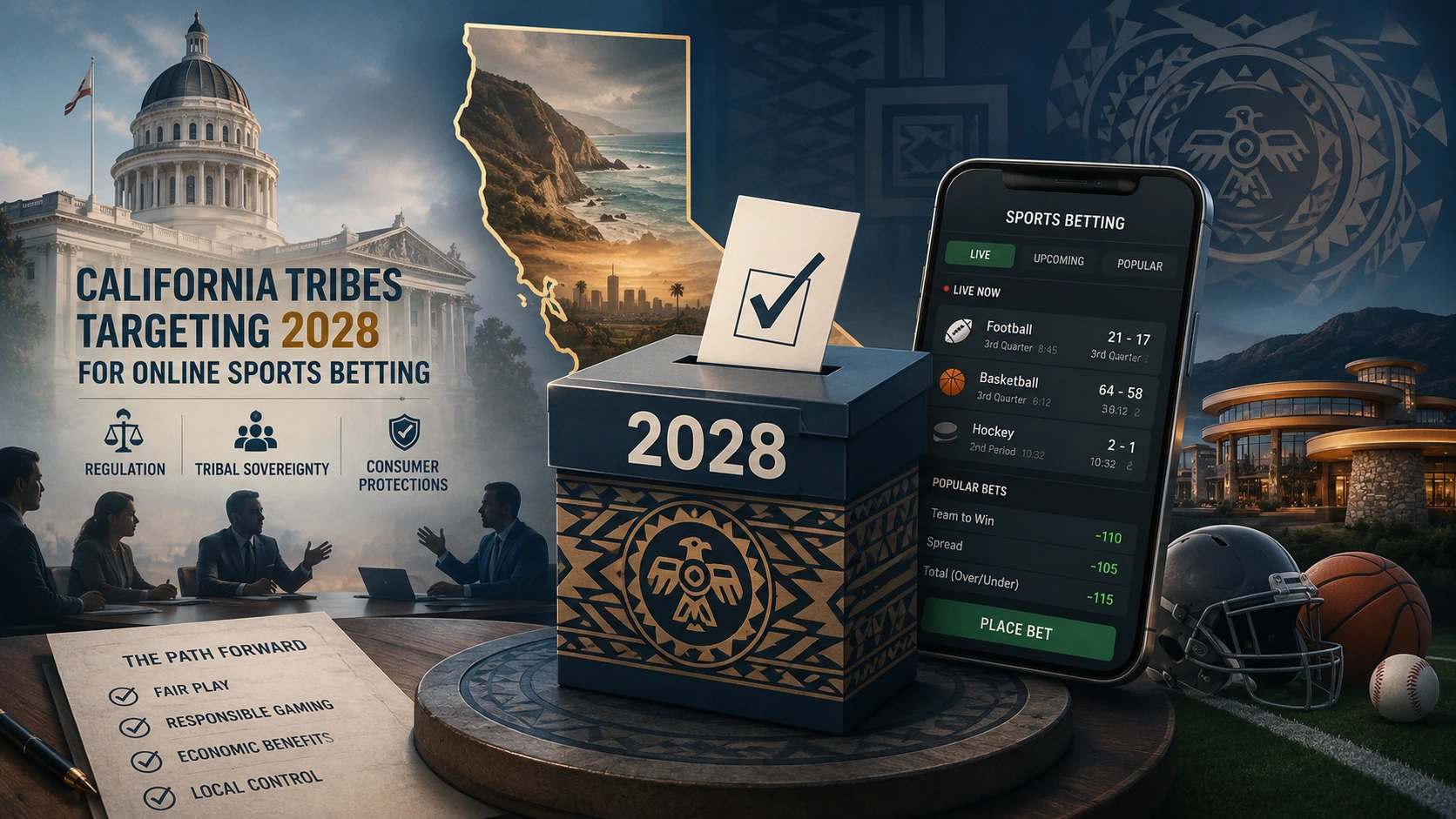
However, any future campaign is expected to look very different from the failed ballot initiatives of 2022. Tribal representatives have indicated that a new proposal would need to be led by California tribes, supported by broad agreement across the tribal gaming community and structured so that the financial benefits are not limited to only a small number of major casino operators.
At the same time, the rapid growth of prediction markets is creating a new challenge. Tribal gaming leaders increasingly view sports event contracts as a threat to tribal gaming exclusivity because they can offer products that closely resemble sports betting without operating under California gaming licenses, tribal-state compacts or the state’s traditional gambling regulations.
The result is a developing political and legal debate that could shape not only the future of sports betting in California, but also the wider relationship between tribal governments, regulators, prediction market platforms and major sportsbook operators.
Why California tribes are looking at 2028
The mention of 2028 does not mean that a final ballot proposal has already been completed or that a campaign is guaranteed to move forward.
Tribal leaders are expected to use the coming years to negotiate several important issues, including market control, licensing, revenue distribution and the role of commercial sportsbook companies.
Public opinion will also be an important factor. Before launching another expensive statewide campaign, tribal organizations will likely want evidence that California voters are more open to online sports betting than they were during the 2022 election.
Because California voters must approve a constitutional amendment before online sports betting can be broadly legalized, the process is more complicated than passing a standard bill through the state legislature.
Any successful measure would therefore require a carefully coordinated campaign, clear voter messaging and substantial support from California’s tribal gaming community.
What tribes learned from the 2022 ballot defeat
California’s previous attempt to legalize sports betting ended with the overwhelming rejection of two competing ballot measures.
Proposition 26 would have allowed retail sports betting at tribal casinos and selected horse racing tracks. Approximately one-third of voters supported the proposal, while around two-thirds voted against it.
Proposition 27 would have authorized online and mobile sports betting through partnerships between commercial operators and participating tribes. The measure suffered an even larger defeat, receiving support from fewer than one in five voters.
The campaigns became some of the most expensive ballot battles in California history. Tribal gaming interests and national sportsbook companies spent heavily on competing advertisements, with each side warning voters about the risks of the other proposal.
Instead of presenting voters with a unified framework for regulated sports betting, the two campaigns created confusion and exposed deep disagreements over who should control the market.
For tribal leaders, one of the main lessons from 2022 is that another initiative is unlikely to succeed unless the tribes first agree on a common structure.
A model designed to include smaller tribes
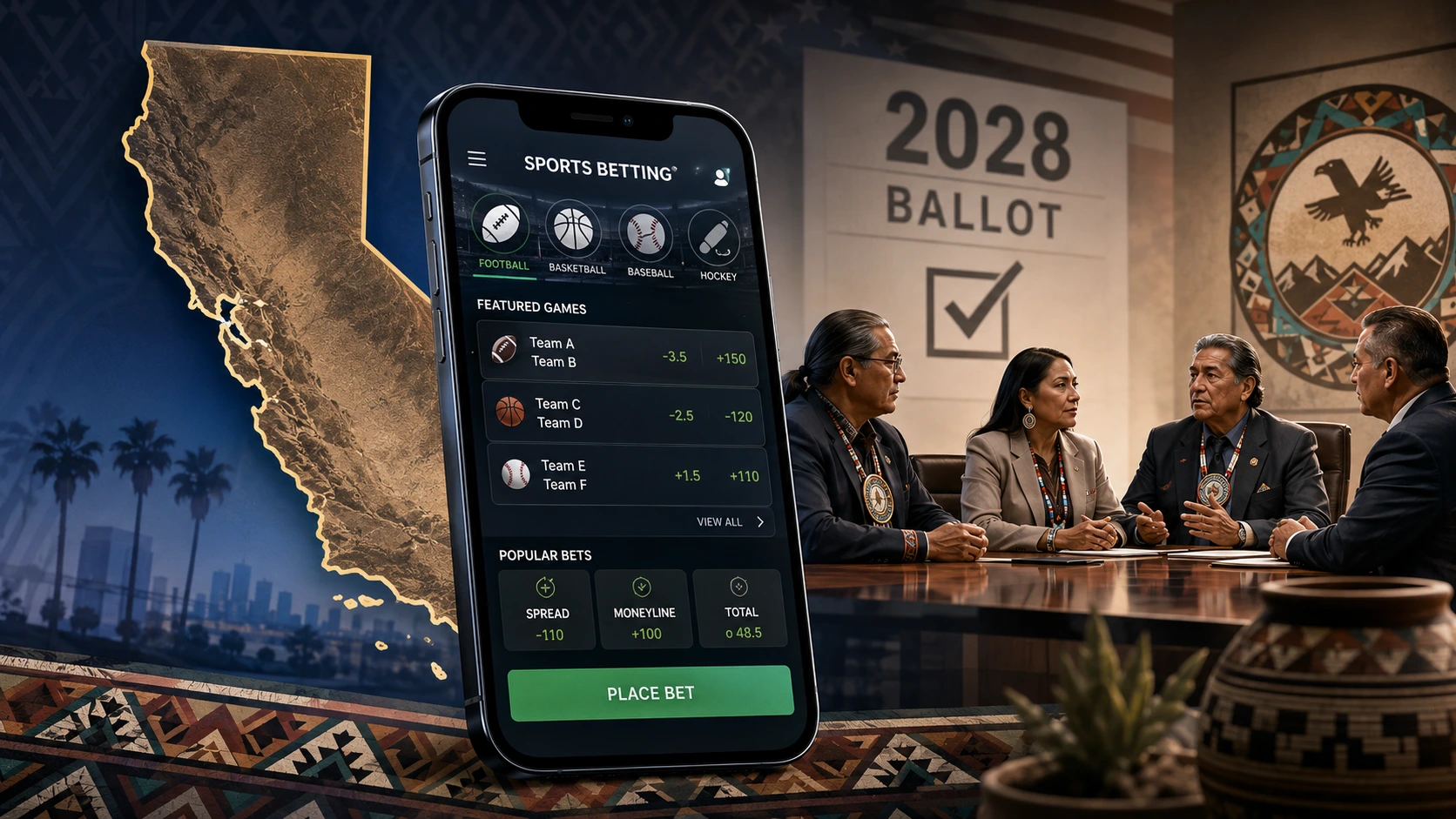
California is home to more than 100 federally recognized tribes, but not all of them operate large casinos.
Many tribes have no gaming operations, while others manage smaller properties that generate significantly less revenue than the state’s largest tribal casino resorts.
That creates an important challenge for any future online sports betting model. A proposal that allows only a small number of wealthy tribes to dominate the market could struggle to receive broad tribal support.
Tribal representatives have therefore discussed the importance of creating a system in which smaller and non-gaming tribes also receive economic benefits.
Such a framework could involve revenue-sharing payments, a jointly controlled online betting platform or another centralized structure designed to distribute part of the market’s income across participating tribal communities.
No final model has been publicly confirmed. However, the principle that all tribes should benefit is expected to be central to future negotiations.
Why California may avoid the Arizona model
California tribal leaders have suggested that Arizona’s sports betting structure is not a model they want to copy.
Arizona awarded mobile sportsbook licenses to selected tribes and professional sports organizations. While the state created a competitive market, some tribal communities were unable to secure direct access to online betting licenses.
California tribes are likely to push for a system that gives tribal governments greater control and avoids placing professional sports teams or commercial operators in a stronger position than smaller tribal communities.
Under a California tribal-led model, commercial sportsbook companies could still provide technology, trading systems, risk management and customer platforms.
However, the licenses, branding and overall market control would likely remain under tribal authority.
How major sportsbooks could enter California
Large sportsbook operators such as DraftKings and FanDuel may still play a role in a future California market.
Their position, however, would probably be very different from the one proposed under Proposition 27.
Instead of entering the state through individual commercial agreements and operating with significant control over their own brands, sportsbook companies may need to work as technology or platform providers within a broader tribal framework.
This could mean that a tribe or tribal organization holds the license while a commercial operator supplies the mobile betting software, odds systems, account management tools and customer support infrastructure.
Major operators have spent the years following the 2022 defeat trying to improve their relationships with California tribes. Whether those efforts are enough will depend on their willingness to accept a market structure led by tribal governments.
Prediction markets are changing the debate
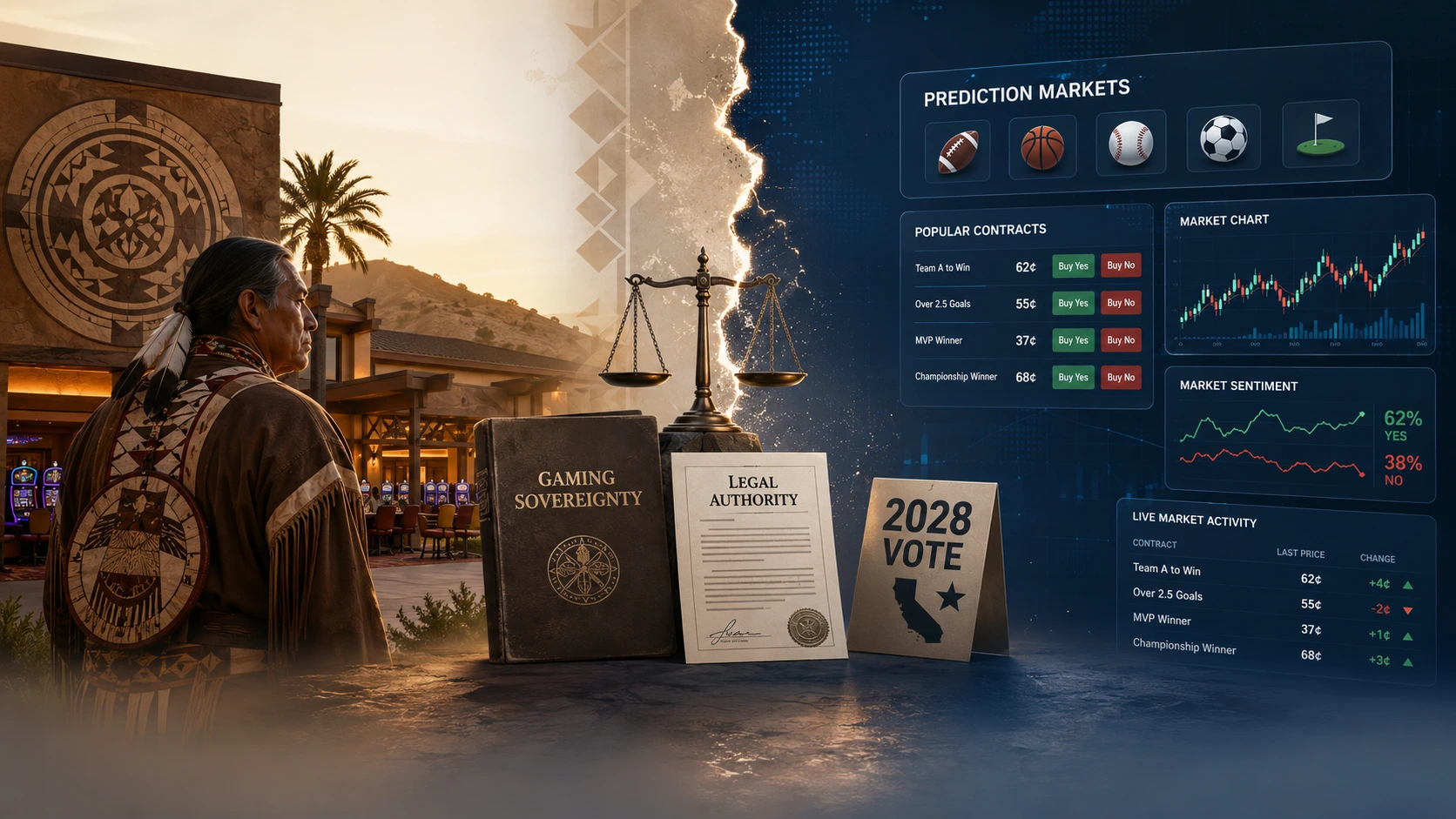
Prediction markets allow users to buy and sell contracts based on the outcome of future events.
In sports markets, a user might purchase a contract that pays out if a particular team wins a game, a player receives an award or a specific result occurs.
Prediction market companies describe these products as federally regulated event contracts rather than traditional sports bets. Their legal argument is that the contracts fall under federal commodities law and the jurisdiction of the Commodity Futures Trading Commission.
Tribal gaming organizations strongly dispute that distinction.
From their perspective, sports event contracts perform the same basic function as sportsbook wagers. Users risk money on the result of a sporting event and receive a financial return when their prediction is correct.
The main difference is that prediction market platforms may operate without a California sports betting license, without a tribal gaming agreement and without contributing revenue through the state’s traditional gambling system.
Why event contracts face legal challenges
The central legal question is whether sports event contracts should be regulated as financial products or gambling.
Prediction market operators argue that federal commodities law gives them the right to offer these contracts nationally.
State regulators, gaming authorities and tribal organizations argue that sports-related contracts should remain subject to state gambling laws, tribal gaming rights and federal laws governing gambling on tribal lands.
Courts and regulators are still examining where the line should be drawn.
The outcome of those cases could have major consequences for California. If prediction market operators receive broad federal protection, they may be able to reach California users even while traditional online sportsbooks remain prohibited.
If states and tribes gain greater authority to restrict sports event contracts, pressure to create a regulated California sports betting market could increase.
Tribal gaming exclusivity remains central
For California tribes, the dispute is about more than competition between gambling products.
Tribal gaming has become an important source of economic independence and self-government. Casino revenue supports health services, housing, education, infrastructure and social programs in many tribal communities.
California’s tribal casino industry generates billions of dollars each year. Any product that offers sports wagering or casino-style activity outside the tribal system could reduce revenue and weaken the value of existing tribal gaming rights.
That is why prediction markets are increasingly being treated as a direct threat rather than a separate financial product.
Tribal representatives are concerned that companies may use federal commodities regulation to bypass rights and agreements that tribes have spent decades establishing.
Prediction markets could accelerate the 2028 campaign
The expansion of prediction markets may give California tribes an additional reason to pursue online sports betting in 2028.
If sports event contracts continue growing, tribal leaders could argue that online sports wagering is already reaching California consumers without state-level safeguards or tribal oversight.
A tribal-led sports betting market could then be presented as a way to bring the activity under a regulated framework, introduce consumer protections and ensure that revenue remains connected to tribal communities.
However, prediction markets could also complicate negotiations with commercial sportsbook companies.
If major betting operators can gain indirect access to California customers through federally regulated platforms, they may be less willing to accept strict tribal control and extensive revenue-sharing requirements.
This creates a difficult strategic question for both tribes and sportsbook companies.
What could prevent a 2028 ballot proposal
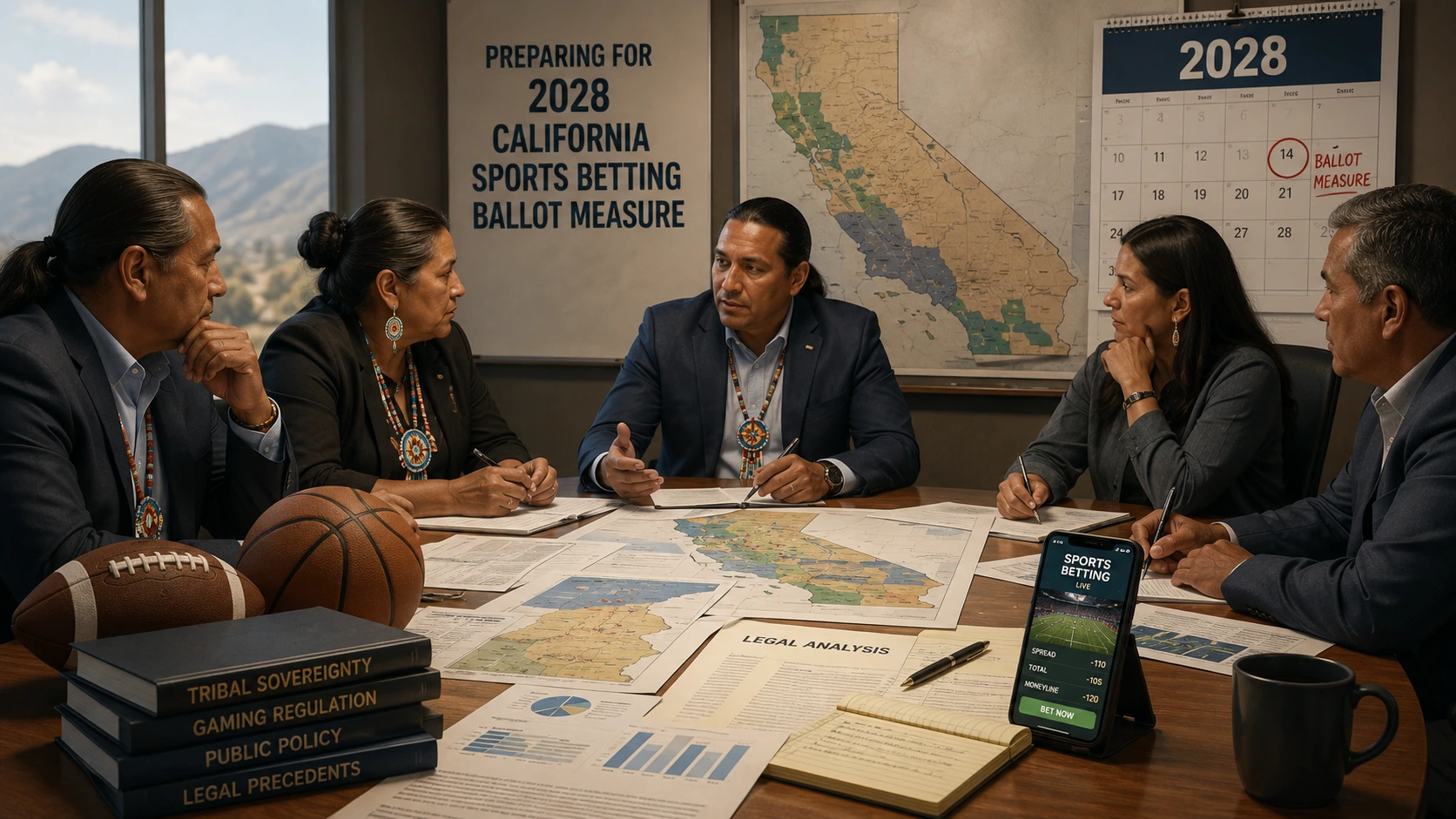
Public opinion remains one of the largest obstacles.
The 2022 results showed that California voters are willing to reject sports betting proposals even when campaigns spend hundreds of millions of dollars.
A future campaign will need to clearly explain who controls the market, how users are protected, how minors are prevented from accessing betting platforms and how revenue is distributed.
Tribal unity is another major issue.
Large casino tribes, smaller gaming tribes and communities without casinos do not always have identical economic priorities. Reaching agreement across such a diverse group will require significant negotiation.
The relationship with commercial operators could create additional tension. Tribes may benefit from the technology and experience of major sportsbook companies, but they are unlikely to support a model that gives those companies control over the market.
Finally, the legal future of prediction markets could completely change the situation before 2028.
Court rulings and federal regulatory decisions may determine whether sports event contracts can continue operating independently of state gambling laws.
What a tribal-led measure may include
No official ballot language, tax rate or licensing structure has been released.
Nevertheless, the likely direction of a future proposal is becoming clearer.
A new measure would probably be led by California tribes, include a system for sharing benefits with smaller and non-gaming tribes and allow commercial sportsbook companies to participate only under tribal terms.
Consumer protection measures would also be expected to play a major role. These could include age verification, responsible gambling controls, geolocation technology, self-exclusion systems and rules governing advertising.
The campaign would also need to demonstrate that a legal tribal-led market offers stronger oversight than unregulated or federally disputed alternatives.
California’s next betting vote could decide more than legalization
A 2028 ballot measure would not simply be another attempt to legalize online sports betting.
It could become a broader vote on the future of tribal gaming authority in California.
The debate will involve questions about who has the right to offer sports-related financial products, which regulators have jurisdiction and whether tribal governments should control the state’s online gambling market.
Prediction markets have made those questions more urgent.
California remains the largest potential sports betting market in the United States without a fully regulated online sportsbook industry. That makes any future proposal nationally significant.
If California tribes succeed in developing a unified framework, the 2028 campaign could become one of the most important gambling policy battles in the country.
If they fail to reach an agreement, prediction market platforms and other alternative products may continue to shape the market before California voters ever receive another opportunity to decide.